
Missing teeth can affect more than just your smile. They can make eating difficult, change the way you speak, and even lower your confidence. Fortunately, modern dentistry offers reliable solutions to replace missing teeth. The two most common options are dental implants and dentures. But how do you know which one is right for you?
At Walsh Dental, we understand that every smile is unique. Choosing the right tooth replacement depends on your oral health, lifestyle, budget, and long-term goals. In this guide, we’ll compare dental implants and dentures to help you make an informed decision for your future oral health.
Why Is Replacing Missing Teeth So Important?
Many people think losing a tooth is only a cosmetic issue. In reality, leaving missing teeth untreated can lead to several oral health problems.
Some common issues include:
- Difficulty chewing certain foods
- Changes in speech
- Shifting of nearby teeth
- Bone loss in the jaw
- Changes in facial appearance
- Increased risk of gum disease
Replacing missing teeth early helps maintain both your smile and your overall oral health.
What Are Dental Implants?
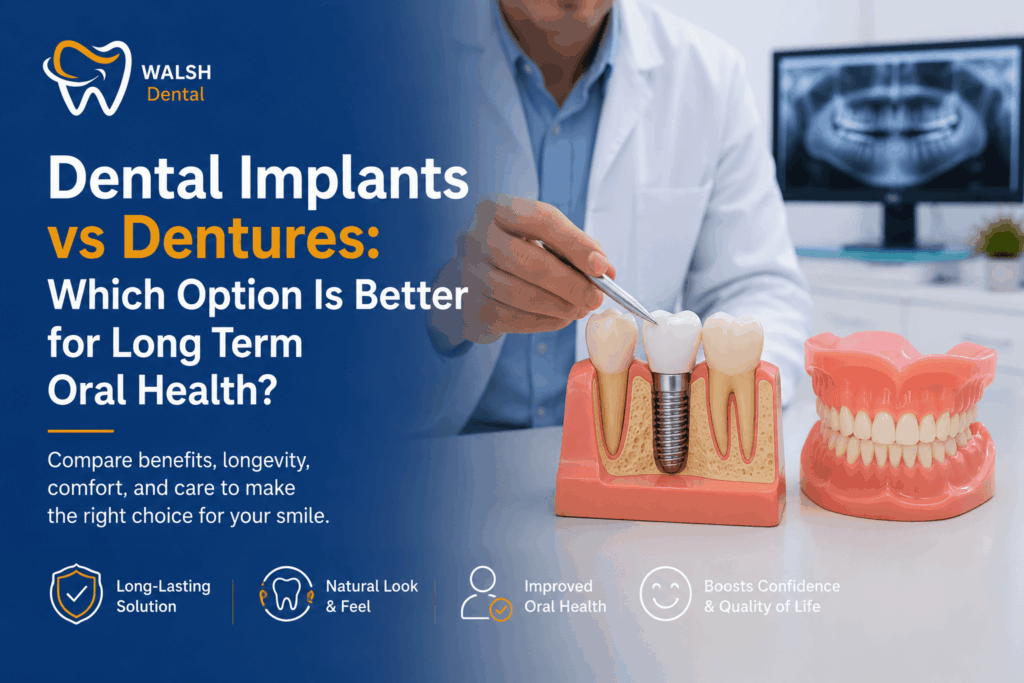
Dental implants are artificial tooth roots made from titanium. They are surgically placed into the jawbone, where they naturally bond with the bone over time. Once healed, a custom-made crown is attached, creating a tooth that looks, feels, and functions like a natural one. Many patients looking for Dental implants Adelaide choose this treatment because it offers a long-lasting and stable solution for missing teeth.
What Are Dentures?
Dentures are removable appliances designed to replace missing teeth. They can replace a few teeth (partial dentures) or all teeth (full dentures). Modern dentures are more comfortable and natural-looking than older versions. They restore appearance and improve chewing ability, making them a popular option for many patients. Unlike implants, dentures rest on the gums and do not become permanently attached to the jawbone.
Dental Implants vs Dentures: What’s the Difference?
Although both treatments replace missing teeth, they work in very different ways.
| Dental Implants | Dentures |
| Permanently fixed | Removable |
| Replace tooth roots | Rest on gums |
| Help preserve jawbone | Do not prevent bone loss |
| Feel like natural teeth | May feel bulky initially |
| Long lifespan | Need replacement over time |
| Require surgery | No surgery needed |
Understanding these differences can help you decide which treatment suits your needs.
Which Option Looks More Natural?
One of the biggest concerns for patients is appearance.
- Dental implants are individually designed to match the colour, size, and shape of your natural teeth. Because they emerge from the gums just like real teeth, they often look almost impossible to distinguish from natural teeth.
- Dentures have improved significantly over the years, but they may still appear less natural, especially if they become loose over time.
If aesthetics are your highest priority, dental implants usually provide the most natural-looking result.
Which Option Is More Comfortable?
Comfort is another major factor when choosing between implants and dentures.
- Since implants become part of your jawbone, they feel very similar to natural teeth. There is no movement while eating or speaking.
- Dentures, on the other hand, may require an adjustment period. Some people experience minor soreness, movement, or irritation, especially during the first few weeks.
Modern dentures are much more comfortable than older designs, but they still cannot fully match the stability of implants.
Can You Eat Normally with Both Options?
Food plays an important role in overall health, and your tooth replacement should allow you to enjoy a balanced diet.
- Dental implants provide excellent chewing strength. Most people can comfortably eat apples, nuts, steak, and other firm foods without worrying about movement.
- Dentures restore chewing ability but may require you to avoid very hard, sticky, or chewy foods. Certain foods can cause dentures to shift while eating.
If enjoying your favourite meals is important, implants often provide greater freedom.
Which Option Lasts Longer?
When considering long-term oral health, durability matters.
- Dental implants are designed to last for many years. With proper brushing, flossing, regular dental visits, and good oral hygiene, they can often last decades.
- Dentures generally require replacement or adjustment every several years due to natural changes in the gums and jawbone. As bone gradually shrinks, dentures may become loose and need relining or replacement.
This is one reason why many patients choose Dental implants Adelaide as a long-term investment in their oral health.
Do Dental Implants Help Protect the Jawbone?
Yes and this is one of the biggest advantages of implants. When a natural tooth is lost, the jawbone underneath no longer receives stimulation. Over time, the bone begins to shrink, which can change facial appearance and weaken nearby teeth.
Dental implants act like natural tooth roots, stimulating the jawbone every time you chew. This helps maintain bone density and supports long-term oral health. Dentures replace missing teeth but cannot stop bone loss because they rest on the gums rather than inside the jawbone.
Who Is a Good Candidate for Dental Implants?
Dental implants are suitable for many adults, but not everyone is an immediate candidate.
You may be suitable if you:
- Have one or more missing teeth
- Have healthy gums
- Have enough jawbone to support an implant
- Practice good oral hygiene
- Are generally in good health
If additional procedures such as bone grafting are required, an experienced Implant dentist Adelaide can assess your situation and recommend the most suitable treatment plan.
Are Dentures the Better Choice for Some People?
Although dental implants offer many long-term benefits, dentures remain an excellent solution for many patients.
Dentures may be recommended if you:
- Have lost most or all of your teeth.
- Do not have enough jawbone for implants.
- Want a non-surgical treatment.
- Need a more affordable tooth replacement option.
- Prefer a quicker treatment process.
Today’s dentures are lighter, more comfortable, and more natural-looking than ever before. With regular adjustments and proper care, they can restore your smile and improve daily life. The best choice depends on your individual needs, and a professional dental assessment can help you decide which option will give you the best results.
How Much Maintenance Do Dental Implants and Dentures Need?
Both options require good oral hygiene, but the care routine is different.
- Dental implants can be cared for much like natural teeth. Daily brushing, flossing, and routine dental check-ups help keep the surrounding gums healthy. While the implant itself cannot develop decay, the gums around it still need proper care to prevent infection.
- Dentures should be removed and cleaned every day using products recommended by your dentist. They should also be stored properly when not in use to prevent damage. Regular dental visits are important because dentures may need adjustments as your mouth naturally changes over time.
No matter which option you choose, maintaining good oral hygiene is essential for protecting your oral health.
Which Treatment Is More Cost-Effective in the Long Run?
Many people focus on the initial cost, but it’s equally important to consider long-term value.
- Dental implants usually have a higher upfront cost because they involve surgery, advanced planning, and custom restorations. However, they are designed to last for many years and often require fewer replacements over time.
- Dentures are generally more affordable at the beginning, but they may need relining, repairs, or replacement as your gums and jawbone change. These ongoing costs can add up over the years.
When thinking about long-term oral health, many patients find that implants provide excellent value because of their durability and stability.
How Long Does the Treatment Take?
The treatment timeline varies depending on the option you choose.
- Dental Implants: Implant treatment usually takes several months because the implant needs time to fuse with the jawbone before the final crown is placed. Although the process takes longer, the result is a secure and long-lasting replacement.
- Dentures: Dentures can usually be made and fitted within a few weeks, making them a quicker solution for replacing missing teeth.
If restoring your smile quickly is your main priority, dentures may be the faster option. If you’re looking for a long-term investment, implants are often worth the extra treatment time.
Which Option Is Better for Your Confidence?
A healthy smile can make a big difference in everyday life.
- Dental implants feel secure because they stay firmly in place while talking, laughing, and eating. Many patients say they quickly forget they even have an implant because it feels so natural.
- Dentures can also restore confidence by replacing missing teeth and improving facial appearance. However, some people may feel self-conscious if dentures become loose over time.
Feeling comfortable with your smile is important, and choosing the right treatment can improve both your confidence and quality of life.
How Can Your Dentist Help You Decide?
There is no single solution that suits everyone.
Your dentist will assess several factors, including:
- The number of missing teeth
- The health of your gums
- Jawbone density
- Medical history
- Lifestyle
- Budget
- Long-term oral health goals
By considering all these factors, your dentist can recommend the treatment that best meets your individual needs. At Walsh Dental, every treatment plan is personalised to help patients achieve a healthy, functional, and confident smile. Whether you’re considering implants or dentures, professional guidance ensures you make the right decision for your oral health.
Final Thoughts
Both dental implants and dentures are effective ways to replace missing teeth, but they offer different advantages.
- Dental implants provide exceptional stability, preserve the jawbone, and closely resemble natural teeth, making them an excellent long-term solution for many patients.
- Dentures remain a practical choice for people looking for a non-surgical and more affordable option that restores both appearance and function.
The right treatment depends on your individual oral health, lifestyle, and personal goals. A comprehensive dental examination is the best way to determine which solution is right for you.
If you’re considering tooth replacement options, Walsh Dental is here to help. Our experienced team will explain every option, answer your questions, and create a personalised treatment plan so you can enjoy a healthier, more confident smile for years to come. Connect with us today!
Frequently Asked Questions
1. Which lasts longer, dental implants or dentures?
Dental implants generally last much longer than dentures when cared for properly. While dentures may require replacement or adjustment over time, implants are designed to provide a durable, long-term solution.
2. Are dental implants painful?
The implant procedure is performed using local anaesthesia, so patients usually experience minimal discomfort during treatment. Mild soreness after the procedure is normal and typically improves within a few days.
3. Can everyone get dental implants?
Not everyone is an immediate candidate. Healthy gums, sufficient jawbone, and good overall health are important factors. Your dentist will evaluate whether implants are suitable for you.
4. How do I clean dentures?
Dentures should be removed daily and cleaned with a denture brush and recommended cleaning solution. Regular dental check-ups help ensure they continue to fit properly.
5. How do I know whether implants or dentures are right for me?
The best option depends on your oral health, lifestyle, budget, and long-term goals. A professional consultation will help determine which treatment is most suitable for your individual needs.