Single Tooth Implant vs. Full Mouth Reconstruction
Missing or damaged teeth can affect how you chew, speak, and feel about your smile. At Walsh Dental, we assess your oral health to recommend the right solution. If you have one missing tooth and healthy surrounding teeth and gums, a single dental implant may be suitable. For those considering dental implant Adelaide treatment, a personalised consultation can help determine the best option.
If you have multiple missing or damaged teeth, significant wear, or bite problems, full mouth reconstruction may be a better choice. It can address several dental concerns together and help improve your overall oral function and smile. Our team can explain both options and help you choose the treatment that best suits your needs.
What Is a Single Tooth Implant?
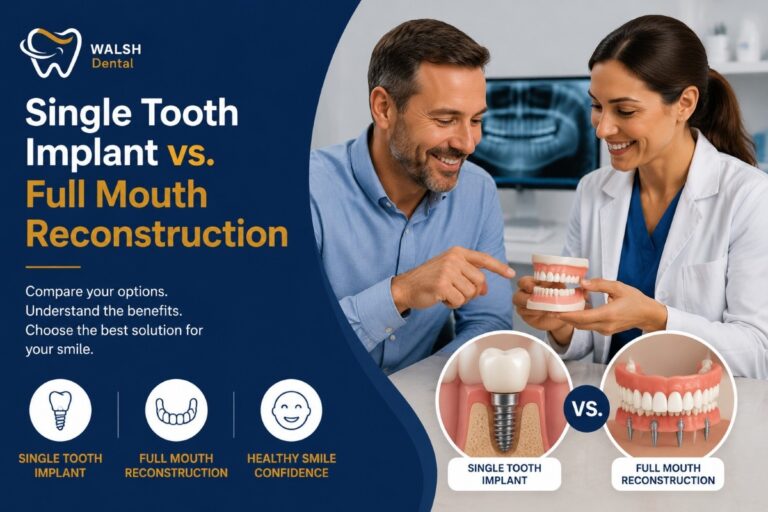
A single tooth implant is a treatment designed to replace one missing tooth without affecting the healthy teeth next to it. It’s one of the most common and predictable ways to restore both function and appearance after tooth loss.
The process generally involves three parts:
The implant post – a small titanium screw placed into the jawbone, acting as an artificial tooth root
The abutment – a connector piece that attaches to the implant post
The crown – a custom-made, tooth-coloured cap that sits on top and blends in with your natural teeth
Once placed, the implant fuses with the jawbone over a period of months in a process called osseointegration, giving it the stability of a natural tooth root.
Who is a good candidate?
A single tooth implant is typically suitable for patients who:
Have lost one tooth due to injury, decay, or infection
Have healthy gums and enough jawbone density to support an implant
Want a permanent, natural-looking solution rather than a removable option
Don’t have widespread dental issues affecting multiple teeth
For many patients, this is a straightforward, well-established procedure with a high success rate.
What Is Full Mouth Reconstruction?
Full mouth reconstruction is a broader, more personalised treatment plan used when multiple teeth, sometimes all of them need to be restored or replaced. It’s not a single procedure but a combination of treatments tailored to rebuild both the function and appearance of your entire smile.
Depending on your needs, full mouth reconstruction may combine:
Multiple dental implants
Crowns and bridges
Bite (occlusal) correction
Gum treatment
Root canal therapy where needed
Full or partial dentures in some cases
Because it addresses the mouth as a whole system, teeth, gums, jaw joints, and bite alignment, full mouth reconstruction is usually planned in stages over several appointments.
Who is a good candidate?
Full mouth reconstruction tends to suit patients who have:
Multiple missing, broken, or severely decayed teeth
Advanced gum disease affecting several areas of the mouth
Chronic bite problems, jaw pain, or excessive tooth wear
A combination of cosmetic and functional issues that a single treatment can’t resolve
If you’ve experienced years of untreated dental problems or significant trauma affecting multiple teeth, this comprehensive approach is often the most effective long-term solution.
Key Differences: Single Tooth Implant vs. Full Mouth Reconstruction
While both treatments aim to restore a healthy, functional smile, they differ significantly in scope and approach.
Scope of treatment: A single tooth implant addresses one missing tooth in isolation. Full mouth reconstruction takes a whole-mouth view, often correcting bite, gum health, and multiple teeth at once.
Procedure complexity and number of visits: Single implants usually involve a more predictable, shorter treatment timeline, typically a placement appointment followed by a healing period and then the crown fitting. Full mouth reconstruction is more complex and is generally staged across multiple visits over several months since it may involve coordinating implants, restorations, and sometimes gum or bite treatment together.
Recovery time: Recovery after a single implant is usually limited to the site of the one tooth. With full mouth reconstruction, recovery is spread across the whole treatment plan since different procedures may have their own healing periods.
Cost comparison: A single tooth implant is a smaller, one-off investment. Full mouth reconstruction costs more overall, simply because it covers more procedures, but it’s also solving a wider range of problems in one coordinated plan rather than addressing issues piecemeal over time.
Longevity and durability: Both options, when properly planned and maintained, can last for many years. Dental implants themselves are known for their durability, and with good oral hygiene and regular check-ups, both single implants and full-mouth implant-supported restorations can serve patients well for decades.
Which Option Is Right for You?
Choosing between the two comes down to a few key factors:
Number of teeth affected – One damaged or missing tooth generally points toward a single implant. Multiple problem areas usually call for a broader plan.
Condition of your bite and jaw – If you’re dealing with jaw pain, uneven wear, or bite misalignment alongside missing teeth, full mouth reconstruction is more likely to resolve the underlying cause, not just the symptom.
Budget and health fund coverage – A single implant is a smaller upfront cost, while full mouth reconstruction is typically planned and staged to help spread the investment.
Aesthetic and functional goals – If your main concern is one visible gap, a single implant will usually do the job. If you’re unhappy with your smile overall, or struggling to chew comfortably, a full reconstruction addresses those goals together.
The clearest way to know which path suits your situation is a proper clinical assessment, including x-rays and a discussion of your goals, which is exactly what a consultation is for.
Benefits of Each Option
Single tooth implant benefits:
Preserves healthy neighbouring teeth (no need to grind them down, unlike a bridge)
Looks, feels, and functions like a natural tooth
Straightforward, well-understood procedure with predictable outcomes
Helps prevent bone loss in the area of the missing tooth
Full mouth reconstruction benefits:
Addresses multiple issues in one coordinated treatment plan
Improves overall bite function, not just appearance
Can relieve jaw pain and uneven wear caused by long-term dental problems
Delivers a complete, cohesive smile transformation rather than isolated fixes
What to Expect During Consultation at Walsh Dental
Every treatment plan starts with an honest, thorough assessment. When you visit Walsh Dental in Burnside, your consultation typically includes:
A full oral examination and, where needed, x-rays to assess bone density and the condition of your teeth and gums
A discussion about your dental history, concerns, and goals
An explanation of which treatment options are realistic for your situation, whether that’s a single implant, a broader restorative plan, or something in between
A clear breakdown of the process, timeline, and cost, so there are no surprises
Our team has spent over 20 years helping patients across Burnside and surrounding Adelaide suburbs make informed decisions about their dental care, and we take the time to explain your options clearly before any treatment begins.
Conclusion
Whether you need to replace a single missing tooth or restore your entire smile, the right treatment plan comes down to your unique dental needs, not a one-size-fits-all approach. A single tooth implant offers a focused, reliable solution for isolated tooth loss, while full mouth reconstruction provides a comprehensive path forward when multiple teeth, your bite, or your gum health need attention.
If you’re searching for dental implants Adelaide patients can rely on, or you’re simply unsure which option fits your situation, our team is here to help. Book a consultation at our Burnside clinic today, and let’s build a treatment plan that gets your smile and your confidence back on track.
Frequently Asked Questions
How do I know if I need a single implant or full mouth reconstruction?
This depends on how many teeth are affected and the overall health of your gums, jawbone, and bite. A consultation with an experienced implant dentist Adelaide patients trust is the best way to get a clear recommendation.
Can a single tooth implant turn into a larger treatment plan later?
Sometimes. If additional issues are identified during assessment or arise over time, your dentist may recommend expanding the treatment plan. This is why regular check-ups matter, even after implant placement.
Does health insurance cover dental implants in Australia?
Coverage varies by provider and policy. Many health funds offer partial rebates for implants and related procedures, it’s worth checking your extras cover and discussing options during your consultation.
How long do dental implants last?
With proper oral hygiene and regular dental visits, implants can last for decades. Their longevity is one of the main reasons they’re a preferred solution for both single-tooth replacement and full mouth reconstruction.
Is full mouth reconstruction painful?
Treatment is staged and managed with appropriate pain relief and, where needed, sedation options, so discomfort is kept to a minimum at each stage.
A genuine smile comes from the heart, but a healthy smile needs good dental care.
Visit Our Dental Clinic
Clinic Location
508 Glynburn Road Burnside SA 5066
Call
08 83310436
Working Hours
- Mon : 08.30 A.M - 06.00 P.M
- Tue : 08.30 A.M - 07.00 P.M
- Wed : 08.30 A.M - 08.00 P.M
- Thu : 08.30 A.M - 06.00 P.M
- Fri : 08.30 A.M - 06.00 P.M
- Sat : 09.00 A.M - 12.00 P.M (By Appointment)
- Sun : Closed
We proudly accept all major health fund providers across Australia.
As a health fund member with extras cover, you can take advantage of a wide range of dental care benefits tailored to your needs. Our state-of-the-art facilities ensure that you can conveniently claim your rebate on the same day as your treatment, making your experience seamless and hassle-free.
Preferred Providers






Payment Plans



Other Service