Does Teeth Whitening Damage Enamel? Myths vs. Fact
A brighter smile can improve confidence, but many people have one important question before choosing whitening: does teeth whitening damage enamel? If you are considering teeth whitening in Adelaide, it is natural to wonder whether whitening products can weaken the protective surface of your teeth.
The good news is that professionally supervised teeth whitening is generally considered safe for healthy teeth when used correctly. However, the way whitening products are used matters. Overusing products, leaving whitening gel on for too long, or trying harsh DIY methods may increase the risk of sensitivity and irritation.
At Walsh Dental, patients can discuss their smile goals and learn which cosmetic dental options may be suitable for their individual needs. Understanding the facts behind teeth whitening can help you make a confident and informed decision.
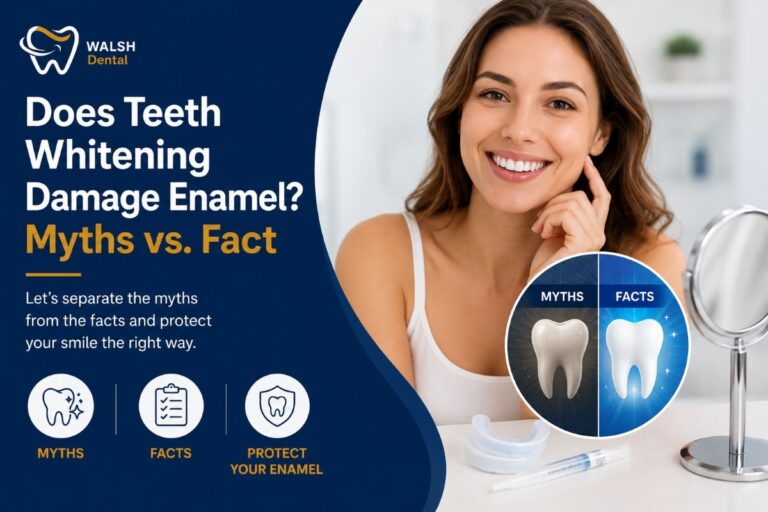
Does Teeth Whitening Damage Enamel?
Enamel is the hard outer layer that protects your teeth. It helps shield the more sensitive inner parts of your teeth from everyday pressure, temperature changes, acids, and bacteria. Because enamel does not naturally grow back after permanent loss, protecting it is an important part of maintaining good oral health.
Whitening does not simply scrape or peel away a layer of enamel. Most professional whitening treatments use peroxide-based ingredients that work by breaking down stain molecules within the tooth. As these compounds are broken down, the teeth can appear lighter. However, not every whitening method is equally suitable. The strength of the product, treatment time, frequency of use, and condition of your teeth can all affect your experience.
This is why whitening should be approached as a dental treatment rather than something to repeat excessively in pursuit of an extremely white smile.
Understanding How Teeth Whitening Works
Teeth naturally change colour over time. Coffee, tea, red wine, smoking, certain foods, ageing, and some medications can contribute to tooth discolouration. Whitening products are designed to reduce certain types of stains. Peroxide-based whitening agents can penetrate the tooth and help break down compounds responsible for darker colouring. This makes the teeth look lighter without physically removing the enamel.
There is also a difference between surface stains and deeper discolouration. Surface stains may sometimes be improved with professional cleaning or stain removal. Deeper stains may respond better to a suitable whitening treatment. It is also important to remember that whitening only changes the colour of natural teeth. Crowns, veneers, bridges, and some fillings do not whiten in the same way. If you have visible dental restorations, your dentist can explain what results you can expect.
Can Teeth Whitening Harm Your Enamel?
For people with healthy teeth, appropriately used whitening treatments are not generally expected to cause significant permanent enamel damage. However, some temporary side effects can occur. The most common is tooth sensitivity. You may notice a short, sharp sensation when consuming cold or hot foods and drinks after whitening. Some people may also experience temporary gum irritation if whitening material comes into contact with the gums. These temporary effects should not automatically be confused with permanent enamel damage.
The risk of problems can increase if whitening products are used incorrectly. Applying a product more frequently than recommended, using unsuitable products, or leaving whitening gel on longer than instructed may increase sensitivity and irritation. If you have cavities, cracked teeth, worn enamel, gum problems, or existing sensitivity, it is important to address these concerns before whitening.
Common Teeth Whitening Myths vs. Facts
There is a lot of information about whitening online, but some popular claims can be misleading. Here are a few common myths and the facts behind them.
Myth 1: Teeth whitening removes enamel
Fact: Whitening treatments are designed to break down stain molecules rather than physically remove enamel. Properly used whitening products do not work like abrasive substances that scrub away the tooth surface.
Myth 2: Every whitening treatment damages teeth
Fact: Whitening treatments vary considerably. A suitable treatment used according to professional recommendations can be safe for many people. Problems are more likely when products are misused or applied to teeth that already have untreated issues.
Myth 3: Whitening for longer gives better results
Fact: Leaving whitening products on for longer than recommended does not necessarily produce better results. It may instead increase the chance of sensitivity or gum irritation. Always follow the recommended treatment time.
Myth 4: Sensitivity means enamel has been destroyed
Fact: Temporary sensitivity can happen after whitening because the treatment may temporarily affect the movement of substances through the tooth. Sensitivity does not automatically mean your enamel has suffered permanent damage. Persistent discomfort should, however, be assessed by a dentist.
Myth 5: Natural whitening methods are always safer
Fact: Natural does not always mean safe for your teeth. Acidic ingredients and abrasive substances commonly recommended online can potentially irritate the gums or contribute to enamel wear when used incorrectly or too frequently.
What Can Cause Enamel Damage During Whitening?
Whitening itself is not usually the main concern when a suitable treatment is used correctly. Problems can arise from improper use or unsuitable products. Factors that may increase the risk of irritation or sensitivity include:
Whitening too frequently
Leaving whitening products on longer than directed
Using products with unsuitable concentrations
Applying whitening products to damaged teeth
Ignoring cavities or gum problems
Using abrasive DIY whitening methods
Using unregulated or unsuitable products
Failing to follow treatment instructions
Whitening should also not be used to hide an unexplained change in tooth colour. If one tooth suddenly becomes darker, it may indicate an underlying dental problem that requires professional assessment.
Professional vs. At-Home Teeth Whitening
There are many at-home teeth whitening options available, including whitening toothpaste, strips, gels, pens, and trays. However, their ingredients, strength, application methods, and results can vary. While these products may be convenient, using them incorrectly or too often can lead to tooth sensitivity or gum irritation.
Professional teeth whitening offers the advantage of having your teeth and gums checked by a dentist before treatment. Your dentist can identify issues such as cavities, gum problems, cracks, or existing sensitivity that may need attention first. The whitening method can then be chosen based on your dental health and desired results, making the process more controlled and predictable.
If you are considering teeth whitening in Adelaide, it is a good idea to speak with a dental professional first. They can help you understand your options and recommend a whitening approach that is suitable for your smile.
How to Whiten Your Teeth Safely
A few simple habits can help make whitening a safer and more comfortable experience.
Get your teeth checked : A dental examination can identify cavities, gum disease, cracks, worn enamel, or other issues before whitening begins.
Follow the instructions : Whether you use a professional or home whitening system, follow the recommended treatment time and frequency. Never assume that using more product will produce better results.
Avoid over-whitening : Once you reach a shade you are happy with, avoid repeatedly whitening your teeth without professional advice. Excessive treatment can increase sensitivity.
Pay attention to sensitivity : Mild, temporary sensitivity can occur, but significant or persistent discomfort should not be ignored. Your dentist may recommend changing or pausing treatment.
- Maintain good oral hygiene : Brush twice daily with fluoride toothpaste and clean between your teeth regularly. Good oral hygiene helps keep your smile healthy and can reduce the buildup of new stains.
Who Should Avoid or Delay Teeth Whitening?
Whitening may not be suitable for everyone straight away. If you have untreated cavities, gum disease, cracked teeth, significant sensitivity, or damaged enamel, these issues may need to be addressed first.
People with crowns, veneers, bridges, or visible fillings should also understand that these restorations generally do not whiten like natural teeth. Whitening natural teeth without considering existing restorations can sometimes result in a colour mismatch.
Anyone who is unsure about whether whitening is appropriate should speak with a dentist before beginning treatment. Individual dental health and the cause of tooth discolouration should always be considered.
How to Protect Your Teeth After Whitening
Good aftercare can help maintain your whitening results while supporting healthy teeth and gums. Continue brushing and cleaning between your teeth regularly. If your teeth feel sensitive after treatment, temporarily avoiding very hot or cold foods and drinks may make you more comfortable. It can also help to reduce frequent consumption of highly staining foods and drinks such as coffee, tea, red wine, and certain dark-coloured foods.
Regular dental examinations and professional cleaning can help manage plaque and surface staining. Your dentist can also advise you about when further whitening may be appropriate. At Walsh Dental, cosmetic dental treatment can be considered alongside your overall oral health, helping you work towards a brighter smile without overlooking the health of your teeth and gums.
When Should You Speak to a Dentist About Whitening?
A dental consultation is a good starting point if you are unsure whether whitening is suitable for you. You should particularly speak with a dentist if:
Your teeth are already sensitive
You have toothache or untreated cavities
Your gums bleed or feel sore
You have cracked or worn teeth
One tooth has suddenly changed colour
You have crowns, veneers, or visible fillings
Previous whitening caused significant discomfort
You are unsure which whitening product to use
A dentist can assess your oral health, discuss your expectations, and explain which treatment options may be appropriate.
Teeth Whitening at Walsh Dental
Choosing a whitening treatment is about more than selecting the strongest available product. Your current tooth colour, type of staining, dental health, existing restorations, and desired outcome should all be considered. A dental professional can help you understand what type of whitening may work for your smile and what results are realistic. They can also explain possible side effects and how to manage sensitivity if it occurs. Professional guidance can be especially useful if you have previously tried over-the-counter products or home remedies without achieving the results you wanted.
Final Thoughts: A Brighter Smile Starts With Healthy Teeth
So, does teeth whitening damage enamel? When an appropriate treatment is used correctly, whitening is generally considered safe for healthy teeth. The main concerns are usually linked to excessive use, unsuitable products, incorrect application, or whitening teeth that have untreated dental problems. Temporary sensitivity can occur, but it does not necessarily mean permanent enamel damage.
If you are considering teeth whitening in Adelaide, start with a professional assessment so you can understand your options and choose an approach that suits your smile. A Whitening dentist Adelaide patients can rely on can help you balance cosmetic goals with good oral health. A brighter smile should always begin with healthy teeth, and Walsh Dental can help you take a more informed approach to your smile.
Frequently Asked Questions
Does teeth whitening permanently damage enamel?
When an appropriate whitening treatment is used correctly, it is generally not expected to cause significant permanent enamel damage in healthy teeth. Overuse or misuse can increase the risk of sensitivity and irritation.
Is professional teeth whitening safe for enamel?
Professional whitening can be a safe option for many people when the treatment is appropriate for their dental health and used as directed. A dental assessment can help identify problems before treatment.
Why do my teeth feel sensitive after whitening?
Temporary sensitivity is a common side effect of whitening. It usually settles after treatment, but severe or persistent sensitivity should be checked by a dentist.
How often can I whiten my teeth?
There is no single schedule that works for everyone. The appropriate frequency depends on the whitening method and your dental health. Follow your dentist’s recommendations or the product instructions.
Are DIY teeth-whitening methods safe?
Some DIY methods may contain acidic or abrasive ingredients that can harm teeth or irritate gums when used incorrectly. It is generally better to use products specifically designed for dental whitening and follow their instructions.
A genuine smile comes from the heart, but a healthy smile needs good dental care.
Visit Our Dental Clinic
Clinic Location
508 Glynburn Road Burnside SA 5066
Call
08 83310436
Working Hours
- Mon : 08.30 A.M - 06.00 P.M
- Tue : 08.30 A.M - 07.00 P.M
- Wed : 08.30 A.M - 08.00 P.M
- Thu : 08.30 A.M - 06.00 P.M
- Fri : 08.30 A.M - 06.00 P.M
- Sat : 09.00 A.M - 12.00 P.M (By Appointment)
- Sun : Closed
We proudly accept all major health fund providers across Australia.
As a health fund member with extras cover, you can take advantage of a wide range of dental care benefits tailored to your needs. Our state-of-the-art facilities ensure that you can conveniently claim your rebate on the same day as your treatment, making your experience seamless and hassle-free.
Preferred Providers






Payment Plans



Other Service