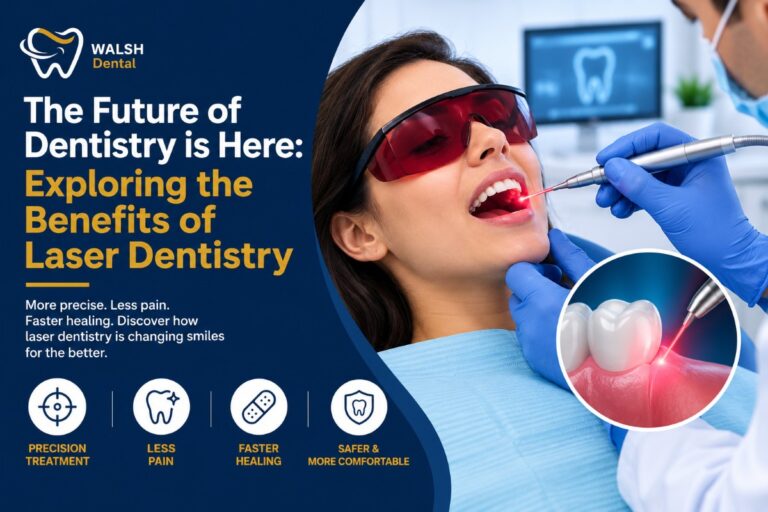
The Future of Dentistry is Here:
Exploring the Benefits of Laser Dentistry
For many people, visiting the dentist can still bring a little anxiety, the sound of the drill, the thought of a needle, or simply not knowing what to expect. Thankfully, modern dental technology has made great progress in helping patients feel more comfortable. One of the most exciting advancements is Laser Dentistry in Burnside, a modern technique that is changing how many common dental procedures are performed. It can make treatments faster, gentler, and often more comfortable than traditional methods.
At Walsh Dental, we believe patients should have access to modern treatment options that focus on comfort while maintaining a high standard of care. In this article, we’ll explain how dental lasers work, the different types used in modern dentistry, the procedures they can be used for, and the safety measures that make this technology a reliable option for patients of all ages.
Unpacking the Science: How Dental Lasers Work
The word “laser” refers to a device that produces a highly focused beam of light at a specific wavelength. Unlike regular light from a standard bulb, which spreads in many directions, laser light stays tightly focused. This allows dentists to work on a very specific area with a high level of accuracy.
When this focused light reaches the tissues inside the mouth, the energy is absorbed and creates a controlled effect. Depending on the type of laser and how it is adjusted, it can gently remove decayed tooth structure, reshape soft gum tissue, or seal small blood vessels during treatment. Since the beam is very precise and has minimal spread, the surrounding healthy tissue is largely left untouched. This is one of the key reasons why laser dental procedures can often result in faster healing and less discomfort compared with some traditional treatments.
Different Types of Dental Lasers and Their Uses
Not all dental lasers are the same, different wavelengths interact differently with oral tissue, so dentists select the right tool for the job. Some of the main categories include:
- Erbium lasers: Erbium lasers are mainly used for hard-tissue treatments. They can help remove tooth decay, reshape small areas of bone, and perform certain gum-contouring procedures. They work well with tooth enamel and other hard tissues.
- Carbon dioxide (CO2) lasers: CO₂ lasers are especially useful for soft-tissue procedures. They offer precise treatment and can help reduce bleeding, making them commonly used for gum treatments and minor soft-tissue procedures.
- Diode lasers: Diode lasers are versatile and are commonly used for soft-tissue treatments. They are often used in gum therapy and may also support the healing of minor oral irritations.
The right laser depends on your specific dental needs. In some cases, traditional treatment may still be the better choice. Your dentist can assess your condition and recommend the safest and most suitable treatment option.
Expanding Treatment Options: Common Laser Dentistry Procedures
Laser technology has opened up new possibilities in modern dental care. Today, it can be used for a range of common treatments, often making procedures more precise, comfortable, and convenient for patients.
- Gum Disease Treatment: Traditional gum treatment may involve scaling and root planing, which can sometimes feel uncomfortable. Laser treatment provides a more targeted approach by removing infected tissue and reducing harmful bacteria, often with less bleeding and a gentler treatment experience. Lasers can also be used to reshape the gums and create a more balanced smile.
- Cavity Treatment: Some dental lasers can remove decayed tooth material without relying only on a traditional drill. They can work with great precision and may reduce the need for anaesthesia in certain cases. This can also help preserve more of the healthy tooth structure.
- Soft Tissue Procedures: Procedures such as frenectomies, which release a tight band of tissue under the tongue or lip, can often be performed using lasers. This may result in less bleeding, a quicker recovery, and, in many cases, no need for stitches.
- Relief from Mouth Sores: Low-level laser therapy may help reduce the pain and discomfort caused by canker sores or cold sores. It can also help reduce inflammation and support the healing process.
- Teeth Whitening: Laser-assisted teeth whitening can help activate whitening products more effectively. This may provide noticeably brighter results in a shorter treatment time compared with some traditional whitening methods.
With more people exploring Laser Dentistry in Burnside, laser technology is becoming a valuable part of modern dental treatment. Its precision and patient-friendly approach can make certain procedures more comfortable and efficient, giving patients another option for caring for their teeth and gums.
Ensuring Safety: Laser Dentistry Protocols
Safety is always a top priority when using dental laser technology. Like any dental treatment equipment, lasers must be used carefully and correctly to protect both patients and dental staff. Dental lasers are classified based on their potential risks, and dental practices follow strict safety protocols during every procedure.
Common safety measures include:
Protective eyewear: Patients and dental staff wear special protective glasses designed to block the specific laser wavelength being used.
Controlled treatment area: The treatment area is carefully managed to prevent unnecessary exposure to the laser.
Proper staff training: Dental professionals receive thorough training on how to operate the laser safely and follow the required safety procedures.
Tissue-specific settings: Laser settings are adjusted according to the type of tissue and the specific treatment being performed.
Continuous monitoring: The patient is closely monitored throughout the procedure to maintain comfort and ensure everything is progressing safely.
Following these safety protocols helps make laser dentistry a controlled, precise, and comfortable treatment option for patients.
Potential Risks and Considerations
Laser dentistry is generally considered safe, but it may not be the best choice for every patient or every dental procedure. Before treatment, it is important to discuss a few factors with your dentist:
Existing medical conditions: If you have certain medical conditions or implanted medical devices, your dentist may need to take additional precautions.
Pregnancy: Laser dental treatment is generally considered low-risk, but it is still a good idea to discuss your treatment with both your dentist.
Realistic expectations: Laser treatment can provide many benefits, but the results may vary depending on the type and complexity of the procedure, as well as how your body heals.
The best way to know if laser dentistry is right for you is to discuss your medical history, concerns, and expectations with your dentist. A qualified dentist will explain the procedure, benefits, limitations, and expected results, while giving you the freedom to make a comfortable, informed decision without any pressure.
What to Expect During a Laser Dental Appointment
If you’re considering a laser-based procedure for the first time, it helps to know roughly what the process looks like:
Consultation and assessment: your dentist examines the area of concern and confirms whether laser treatment is a suitable option for your situation.
Preparation: protective eyewear is provided for both you and the dental team, and any necessary numbing is applied if required (though many procedures need little to none).
Treatment: the laser is used to carry out the procedure with precision, typically with less noise and vibration than traditional tools.
Recovery: most patients experience less swelling and discomfort afterward, with many returning to normal eating and speaking the same day.
Every treatment plan looks a little different depending on the procedure, so your dentist will always confirm the specifics with you beforehand.
Is Laser Dentistry Right for You?
Laser dentistry tends to suit patients who:
Feel anxious about needles, drills, or the noise of traditional tools
Are dealing with early-stage gum concerns or sensitivity
Want a shorter recovery period after a soft tissue procedure
Are interested in whitening treatments with faster, more consistent results
Are looking for a gentler option for younger patients
The best way to know for certain is a proper consultation, where your dentist can assess your oral health and talk through whether laser treatment or a more traditional approach, makes the most sense for your situation.
Why Choose Walsh Dental?
For over 20 years, our practice has proudly served the Burnside community and surrounding suburbs, including Tusmore, Beaumont, Linden Park, Hazelwood Park, Stonyfell, and St. Georges as a family-owned dental clinic built on trust, clear communication, and genuine patient care.
As dental technology continues to advance, we’re committed to exploring treatment options that make visits more comfortable and outcomes more predictable, without ever losing the personal touch that’s defined our practice for two decades. Every consultation starts with a conversation, not a procedure, we take the time to understand your concerns, explain your options clearly, and only recommend treatments that are genuinely right for you.
Patients choose us for:
Two decades of local experience across thousands of appointments
A genuinely family-friendly environment suited to children, adults, and anxious patients alike
Transparent pricing, with gap-free options available for eligible health fund members
A broad range of services under one roof, from preventative care to cosmetic dentistry
- A convenient Burnside location with ample on-site parking
Frequently Asked Questions
Does laser treatment hurt?
Most patients report noticeably less discomfort than with traditional tools, and many procedures need little to no anaesthetic.
Is it suitable for children?
In many cases, yes, the gentler nature of laser treatment can make it a more comfortable option for younger patients, though this is always assessed individually.
How long is the recovery?
This varies by procedure, but laser-treated soft tissue work generally heals faster than traditional methods, often within a few days.
Conclusion
The future of dentistry is being shaped by technology that puts patient comfort at the centre of care and laser dentistry is one of the clearest examples of that shift. With faster healing, greater precision, and often less discomfort than traditional methods, it’s easy to see why more patients are asking about it. If you’re curious whether Laser Dentistry in Burnside could be the right choice for you, the team at Walsh Dental is here to help. Book a consultation today and take the next step toward a healthier, more comfortable dental experience.
A genuine smile comes from the heart, but a healthy smile needs good dental care.
Visit Our Dental Clinic
Clinic Location
508 Glynburn Road Burnside SA 5066
Call
08 83310436
Working Hours
- Mon : 08.30 A.M - 06.00 P.M
- Tue : 08.30 A.M - 07.00 P.M
- Wed : 08.30 A.M - 08.00 P.M
- Thu : 08.30 A.M - 06.00 P.M
- Fri : 08.30 A.M - 06.00 P.M
- Sat : 09.00 A.M - 12.00 P.M (By Appointment)
- Sun : Closed
We proudly accept all major health fund providers across Australia.
As a health fund member with extras cover, you can take advantage of a wide range of dental care benefits tailored to your needs. Our state-of-the-art facilities ensure that you can conveniently claim your rebate on the same day as your treatment, making your experience seamless and hassle-free.
Preferred Providers






Payment Plans



Other Service