
Myths and Facts About Root Canal Treatment
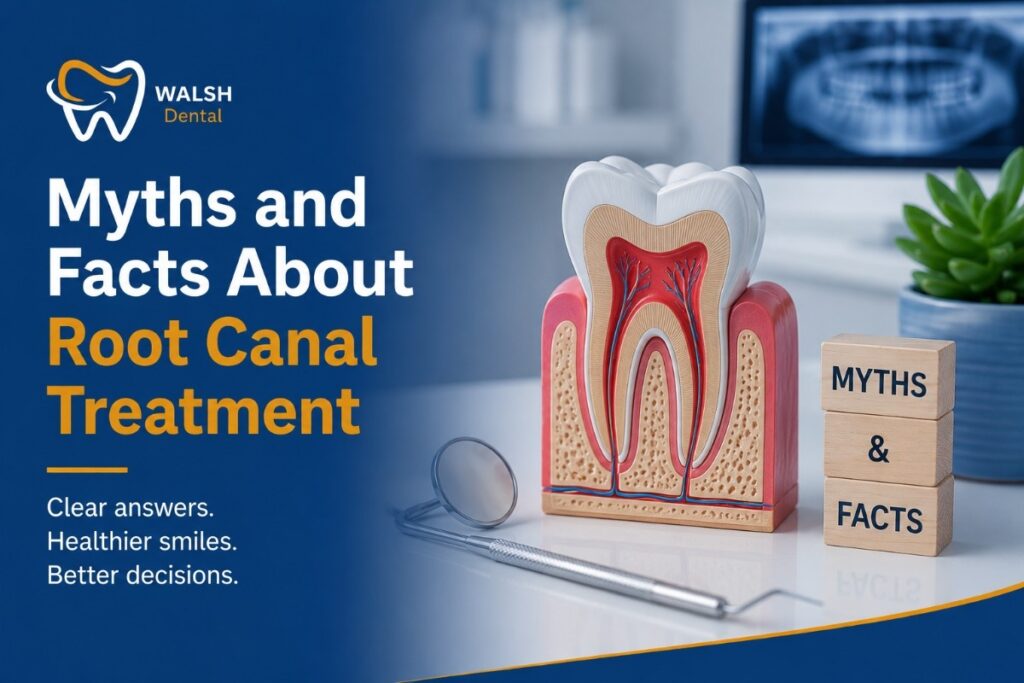
When people hear the words “root canal,” fear and confusion often follow. Many believe it is one of the most painful dental procedures, while others think it is only needed when a tooth is beyond saving. The truth is very different. Modern dentistry has made root canal procedures safe, comfortable, and highly effective for saving natural teeth. At Walsh Dental, patients often come in feeling nervous because of the myths they have heard over the years. However, once they understand the actual facts behind the treatment, they feel much more relaxed and confident. If you are considering Root Canal Treatment in Adelaide, this guide will help you separate myths from reality and understand why this treatment can protect your oral health for years to come. What Is Root Canal Treatment? Root canal treatment is a dental procedure used to remove infected or damaged pulp from inside a tooth. The pulp contains nerves and blood vessels, and when it becomes infected due to deep decay, cracks, or injury, it can cause severe pain and swelling. During the treatment, the infected tissue is removed, the inside of the tooth is cleaned, and the space is sealed to prevent future infection. In most cases, a crown is placed on the tooth afterward to restore its strength and appearance. Thanks to advanced techniques and technology, root canal therapy today is much more comfortable than most people expect. Myth 1: Root Canal Treatment Is Extremely Painful Fact: Modern Root Canal Procedures Are Designed to Relieve Pain This is probably the biggest myth surrounding root canals. Years ago, dental treatments were less advanced, which may have contributed to the fear people still carry today. But modern root canal procedures are very different. Dentists use local anaesthesia and modern equipment to make the procedure comfortable. In fact, most patients say that getting a root canal feels similar to getting a filling. The real pain usually comes from the infection inside the tooth, not from the treatment itself. Root canal therapy actually removes the source of pain and helps patients feel relief quickly. At Walsh Dental, patient comfort is always a priority, and every effort is made to ensure a calm and stress-free experience. Myth 2: It’s Better to Remove the Tooth Instead Fact: Saving Your Natural Tooth Is Usually the Best Option Some people think tooth extraction is easier and cheaper than root canal therapy. However, removing a natural tooth can create other dental problems in the future. When a tooth is removed, nearby teeth may shift, bite problems can develop, and chewing may become more difficult. Replacing the missing tooth with implants, bridges, or dentures can also become more expensive over time. Root canal treatment allows you to keep your natural tooth while restoring its function and appearance. Preserving your original teeth is always preferred whenever possible. That is why many dentists recommend Root Canal Treatment in Adelaide before considering extraction. Myth 3: Root Canals Cause Illness Fact: There Is No Scientific Evidence Supporting This Claim This myth comes from outdated research conducted many decades ago. Modern dental science has completely disproved the idea that root canals cause disease or illness in other parts of the body. Today’s root canal procedures are safe, medically approved, and performed under strict sterilisation standards. In fact, removing an infection from the tooth helps improve overall oral health and prevents bacteria from spreading further. Reliable dental research confirms that root canal therapy is a safe and effective treatment. What Signs May Indicate You Need a Root Canal? Not every toothache requires root canal treatment, but some symptoms should never be ignored. Common warning signs include: If you notice any of these symptoms, it is important to seek professional dental care as early as possible. Delaying treatment can allow the infection to worsen and may even lead to tooth loss. Myth 4: Root Canal Treatment Requires Many Appointments Fact: Many Treatments Can Be Completed Quickly Modern dentistry has made root canal procedures faster and more efficient than ever before. Depending on the condition of the tooth, some treatments can be completed in just one or two visits. The exact number of appointments depends on factors such as: At Walsh Dental, the focus is always on delivering effective care while minimising discomfort and treatment time for patients. Myth 5: If the Pain Stops, the Tooth Is Fine Fact: Pain Disappearing Can Actually Be a Warning Sign Some people assume that if tooth pain suddenly disappears, the problem has healed on its own. Unfortunately, this is not always true. Sometimes, the nerve inside the tooth dies due to infection. While the pain may temporarily stop, the infection can continue spreading silently beneath the surface. Without proper treatment, the infection may damage the surrounding bone and gums. This is why regular dental check-ups are so important. Ignoring symptoms can eventually lead to more complex procedures and higher costs. Why Is Root Canal Treatment Important? Root canal therapy plays a major role in protecting both oral and overall health. Benefits of root canal treatment include: At Walsh Dental, patients receive personalised care and modern solutions to restore healthy smiles comfortably and effectively. How Can You Prevent the Need for a Root Canal? Although root canals are highly successful, prevention is always better than treatment. Here are some simple ways to protect your teeth: Good oral hygiene habits can significantly reduce the risk of infection and the need for major procedures later. Myth 6: Root Canal Treatments Don’t Last Long Fact: A Properly Treated Tooth Can Last for Many Years With good oral care, a tooth that has received root canal treatment can last just as long as natural teeth. The success of the procedure depends on: Advancements in modern Dental treatment in Adelaide have made root canal procedures highly reliable and long-lasting. What Happens After a Root Canal? After treatment, it is normal to experience mild sensitivity for a few days. Most patients return to their normal routine quickly. Aftercare tips include: Proper aftercare helps ensure long-term success and protects