
Teeth Grinding (Bruxism): Causes, Damage, and Night Guards
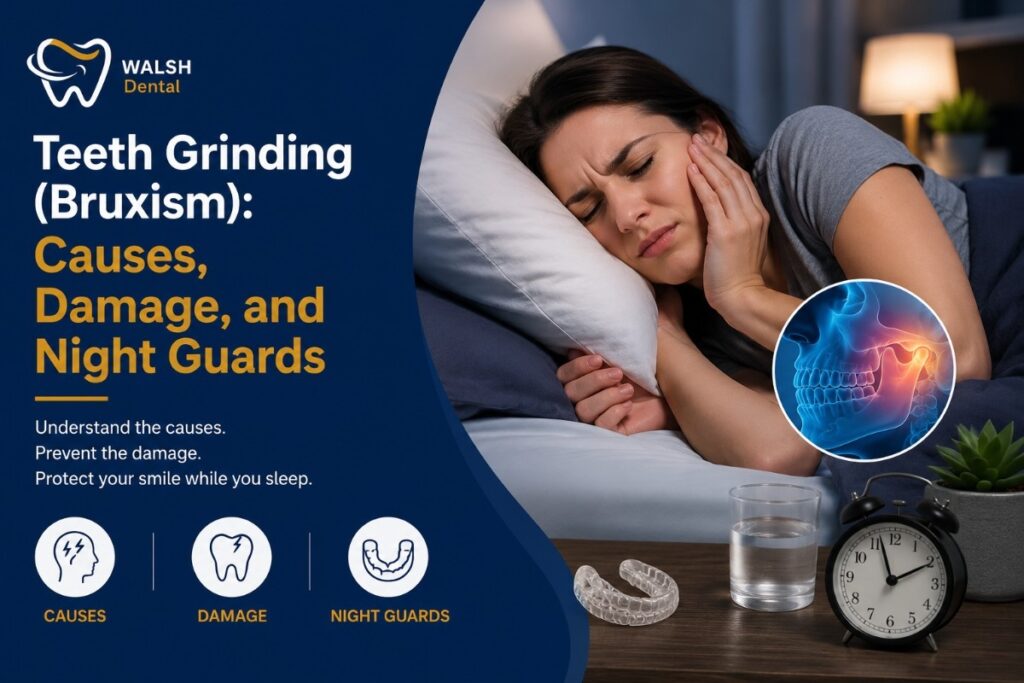
Do you often wake up with a sore jaw, headaches, or sensitive teeth? These could be signs of bruxism, commonly known as teeth grinding or teeth clenching. Many people grind their teeth without even realizing it because it usually happens during sleep. While it may seem like a minor habit, untreated bruxism can cause serious damage to your teeth, jaw, and overall oral health. At Walsh Dental, we regularly help patients identify and manage teeth grinding before it leads to costly dental problems. Whether the grinding is caused by stress, sleep issues, or bite problems, early treatment can protect your smile and improve your quality of life. If you’re looking for reliable dental treatment in Adelaide, understanding bruxism is the first step toward healthier teeth. In this guide, we’ll explain what causes teeth grinding, the damage it can cause, how night guards help, and when it’s time to visit your dentist. What Is Teeth Grinding (Bruxism)? Bruxism is the repeated grinding, clenching, or gnashing of teeth. It can happen while you’re awake or asleep. There are two main types: Since sleep bruxism occurs without you noticing, many people only discover the problem after their dentist spots signs of tooth wear or a partner hears the grinding at night. What Causes Teeth Grinding? Bruxism doesn’t have one single cause. Instead, it usually develops because of several contributing factors. 1. Stress and Anxiety Emotional stress is one of the leading causes of teeth grinding. Work pressure, financial concerns, family responsibilities, or daily anxiety can lead people to clench their jaws without realizing it. 2. Sleep Disorders People with conditions like sleep apnea or poor sleep quality are more likely to experience sleep bruxism. Interrupted sleep patterns may increase jaw muscle activity during the night. 3. Bite Problems Misaligned teeth or an uneven bite can sometimes contribute to grinding. Your jaw may naturally try to find a comfortable position, leading to excessive pressure on the teeth. 4. Lifestyle Habits Certain habits may increase the risk of bruxism, including: These factors may increase muscle activity during sleep. 5. Certain Medications Some antidepressants and other medications may have teeth grinding as a side effect. If you notice new symptoms after starting medication, discuss them with your healthcare provider. 6. Medical Conditions Although less common, neurological conditions such as Parkinson’s disease and certain movement disorders may also contribute to bruxism. How Can You Tell If You’re Grinding Your Teeth? Because most grinding happens during sleep, the warning signs often appear gradually. Common symptoms include: If you experience several of these symptoms regularly, it’s worth scheduling a dental examination. What Damage Can Bruxism Cause? Many people think grinding only affects their teeth, but the damage can extend much further. Tooth Wear : Constant grinding slowly removes the protective enamel. Once enamel is lost, it cannot grow back naturally. Cracked or Broken Teeth : The repeated pressure can weaken teeth, making them more likely to chip or fracture during normal chewing. Tooth Sensitivity : As enamel wears away, the underlying dentin becomes exposed, leading to pain when eating hot, cold, or sweet foods. Jaw Disorders (TMJ) Bruxism puts extra strain on the temporomandibular joints (TMJ), causing: Damage to Dental Restorations Grinding doesn’t only damage natural teeth. It can also shorten the lifespan of: Protecting these restorations is one reason dentists recommend early treatment. Why Should You Never Ignore Teeth Grinding? Bruxism usually starts slowly, but it rarely improves on its own if the underlying cause remains. Ignoring the condition can eventually lead to: The earlier it’s diagnosed, the easier it is to manage. What Is a Night Guard? A night guard is a custom-made dental appliance worn while sleeping. Rather than stopping the muscles from grinding completely, it acts as a protective barrier between the upper and lower teeth. Think of it as a cushion that absorbs the pressure created during grinding. Unlike over-the-counter mouthguards, custom night guards are designed specifically for your bite, making them more comfortable and effective. How Does a Night Guard Help? A professionally fitted night guard offers several important benefits. It can: Patients seeking dental treatment in Burnside often find that a custom night guard is one of the simplest ways to protect their smile from ongoing damage. Are Store-Bought Night Guards Good Enough? While pharmacy night guards are inexpensive, they aren’t designed specifically for your mouth. Problems with generic guards include: Custom-made guards provide a far more accurate fit and better long-term protection. How Does Your Dentist Diagnose Bruxism? Your dentist will examine several signs during a routine check-up. These may include: Sometimes your dentist may also ask questions about your sleep, headaches, or stress levels to better understand the cause. Can Teeth Grinding Be Treated? Yes. Treatment depends on what’s causing the grinding. Your dentist may recommend one or more of the following. Custom Night Guards These remain one of the most effective ways to protect teeth from further damage. Stress Management If stress is contributing to bruxism, techniques such as: may help reduce grinding. Bite Adjustment If bite problems are involved, your dentist may recommend correcting uneven contact between teeth. Restoring Damaged Teeth If grinding has already caused significant wear, treatments may include: These restore both appearance and function. Can Bruxism Be Prevented? Although not every case can be prevented, you can reduce the risk by: Preventive care is always easier than repairing damaged teeth later. When Should You Visit a Dentist? You should book an appointment if you notice: Early diagnosis can prevent years of unnecessary damage. If you’re looking for professional dental treatment in Adelaide, your dentist can identify the cause of bruxism and recommend the most suitable solution before permanent damage occurs. Protect Your Smile with Walsh Dental Teeth grinding may seem harmless at first, but over time it can seriously affect your oral health, comfort, and confidence. The good news is that with the right diagnosis and treatment, most people can successfully manage bruxism and protect their teeth for years to come. At Walsh Dental, our experienced team
Dental Treatment in Adelaide: How to Maintain Oral Hygiene
A healthy smile is not just about looking good. Good oral hygiene plays an important role in your overall health and confidence. From preventing cavities to avoiding gum disease, taking care of your teeth every day can save you from discomfort and expensive procedures later. At Walsh Dental, patients are encouraged to follow simple oral care habits that help keep teeth and gums healthy for years. Whether you are visiting a dentist for routine cleaning, cosmetic procedures, or advanced treatments, maintaining proper oral hygiene is the key to long-lasting results. If you are searching for reliable Dental Treatment in Adelaide, understanding how to care for your oral health is the first step toward a brighter and healthier smile. Why Is Oral Hygiene Important? Oral hygiene is more than brushing your teeth twice a day. It is a complete routine that helps remove plaque, bacteria, and food particles that can lead to tooth decay and gum problems. Poor oral hygiene may cause: In some cases, oral health issues can also affect your overall health. Research shows that gum disease may be linked to conditions such as diabetes and heart disease. That is why regular dental check-ups and proper home care are essential. What Happens If You Ignore Oral Health? Many people delay dental visits until they experience pain. Unfortunately, dental problems often become more serious when ignored. Here are some common issues caused by poor oral care: At Walsh Dental, patients receive guidance on preventing these problems through proper daily care and professional dental support. How Often Should You Brush Your Teeth? Dentists recommend brushing your teeth at least twice a day using fluoride toothpaste. Brushing helps remove plaque and keeps teeth clean. Tips for Effective Brushing Electric toothbrushes can also improve cleaning by reaching difficult areas more effectively. Is Flossing Really Necessary? Yes, flossing is extremely important. A toothbrush cannot clean the spaces between teeth properly. Floss removes trapped food particles and plaque from those areas. Daily flossing can help: If regular floss is difficult to use, interdental brushes or water flossers can be good alternatives. What Foods Help Maintain Healthy Teeth? Your diet plays a major role in oral health. Some foods strengthen teeth, while others increase the risk of cavities. Best Foods for Healthy Teeth Foods to Limit Drinking enough water throughout the day also helps wash away bacteria and food particles. How Can Regular Dental Visits Help? Even with excellent home care, professional dental visits are necessary. Dentists can identify problems early before they become serious. Routine dental appointments may include: People looking for trusted Dental Treatment in Adelaide should schedule regular dental check-ups every six months for better oral health management. Which Dental Treatments Support Better Oral Health? Modern dentistry offers many treatments that improve both oral health and appearance. At Walsh Dental, patients have access to a wide range of dental services designed to restore and maintain healthy smiles. Can Cosmetic Dentistry Improve Confidence? Yes, cosmetic dental treatments can significantly improve self-confidence. Many people feel uncomfortable smiling because of stained, crooked, or damaged teeth. Popular cosmetic procedures include: A beautiful smile can improve personal and professional interactions while boosting overall confidence. How Does Oral Hygiene Change with Age? Oral care needs vary depending on age. Choosing professional Dental care in Adelaide helps patients receive age-appropriate treatment and preventive guidance. What Are the Signs You Should Visit a Dentist Immediately? Some dental symptoms should never be ignored. Visit a Dentist If You Experience: Early treatment often prevents more complex and expensive procedures later. How Can You Maintain Oral Hygiene at Home? Maintaining oral hygiene does not need to be complicated. Small daily habits can make a big difference. Daily Oral Care Routine Consistency is the key to long-term oral health. Why Choose Professional Dental Care? Professional dental care provides more than just treatment. It helps patients understand how to maintain healthy teeth and gums for life. At Walsh Dental, patients receive personalised care based on their individual dental needs. From preventative treatments to cosmetic and restorative procedures, the clinic focuses on improving both oral health and patient comfort. A trusted dental team can help identify issues early, recommend suitable treatments, and guide you toward better oral hygiene habits. Final Thoughts Good oral hygiene is essential for maintaining a healthy and confident smile. Daily brushing, flossing, healthy eating, and regular dental check-ups all play an important role in preventing dental problems. Whether you need preventative care, cosmetic improvements, or advanced dental procedures, choosing the right clinic matters. Walsh Dental offers comprehensive dental solutions designed to support long-term oral health for patients of all ages. Taking care of your teeth today can help you avoid discomfort and maintain a beautiful smile for years to come. For more details, schedule your appointment today! FAQs 1. How often should I visit a dentist? Most dentists recommend visiting every six months for routine check-ups and professional cleaning. 2. What is the best way to prevent cavities? Brushing twice daily, flossing regularly, limiting sugar intake, and attending regular dental appointments can help prevent cavities. 3. Are dental implants a permanent solution? Dental implants are designed to be a long-lasting solution for missing teeth when properly maintained. 4. Is teeth whitening safe? Professional teeth whitening performed by a qualified dentist is generally safe and effective. 5. What should I do during a dental emergency? Contact an emergency dentist immediately if you experience severe tooth pain, swelling, bleeding, or a broken tooth.
Difference Between Veneers, Crowns & Whitening
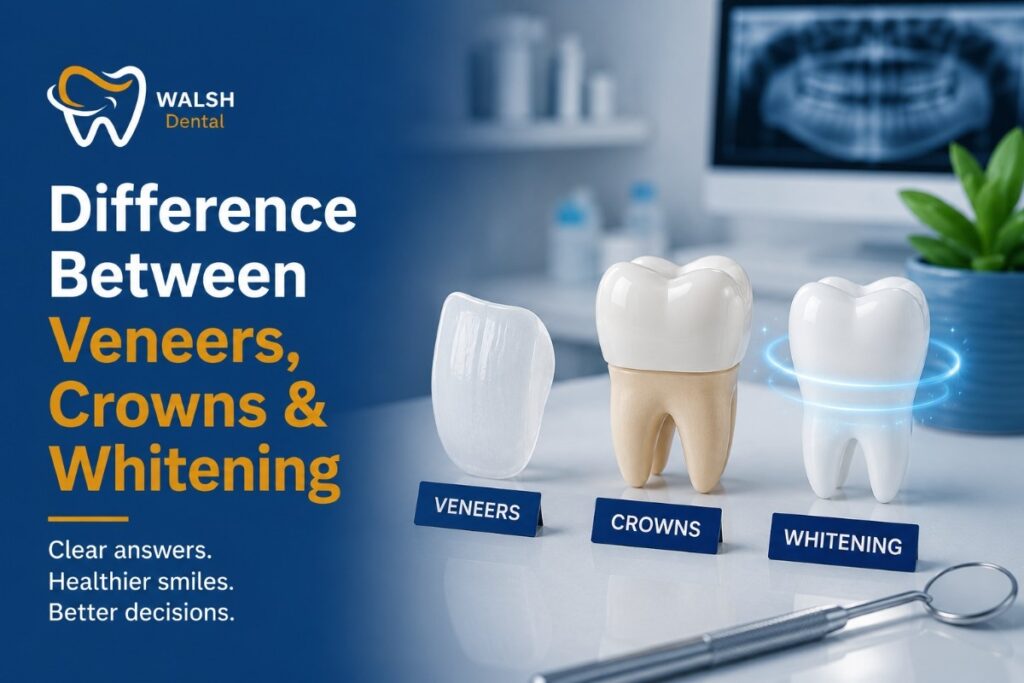
A healthy and confident smile can completely change the way you feel about yourself. Today, modern cosmetic and restorative dentistry offers many solutions to improve your teeth, whether you want a brighter smile, stronger teeth, or a complete smile makeover. At Walsh Dental, patients often ask one common question, what is the difference between veneers, crowns, and teeth whitening? While all three treatments improve your smile, they work in very different ways. Understanding their purpose, benefits, and ideal use can help you choose the right option for your dental needs. If you are considering a professional dental treatment in Adelaide, this guide will help you understand which solution may be best for your smile goals. Why Do People Choose Cosmetic Dental Treatments? Your smile is one of the first things people notice. Stained, chipped, uneven, or damaged teeth can affect confidence and even oral health. Cosmetic dentistry is not only about appearance, many treatments also improve strength, function, and long-term dental health. At Walsh Dental, every treatment is designed according to the patient’s unique smile, lifestyle, and oral condition. Whether you want a quick whitening session or a full smile makeover, understanding your options is the first step. What Is Teeth Whitening? Teeth whitening is one of the fastest and most popular cosmetic dental treatments available today. It focuses on removing stains and discoloration from natural teeth. Professional whitening treatments are much more effective and safer than store-bought products because they are performed under dental supervision using stronger whitening agents. Who Can Benefit Most from Teeth Whitening? Teeth whitening is ideal for people who have: How Does Professional Whitening Work? At Walsh Dental, Zoom Teeth Whitening uses advanced whitening technology to brighten your smile safely and effectively. The procedure usually takes about one appointment and can noticeably improve the shade of your teeth. Benefits of Teeth Whitening Limitations of Whitening Whitening only works on natural teeth. It does not change the color of crowns, veneers, or fillings. It is also not suitable for teeth with severe damage or deep internal discoloration. What Are Porcelain Veneers? Porcelain veneers are thin custom-made shells that are placed over the front surface of teeth to improve their appearance. They are commonly used in smile makeover treatments because they can completely transform the shape, size, and color of teeth. What Problems Can Veneers Fix? Veneers are often recommended for: How Are Veneers Applied? A small amount of enamel is gently removed from the tooth surface so the veneer can fit naturally. Custom porcelain veneers are then bonded securely to the teeth. At Walsh Dental, veneers are carefully designed to match facial features and create a natural-looking smile. Benefits of Veneers Are Veneers Permanent? Yes, veneers are considered a permanent cosmetic treatment because a small amount of enamel is removed during preparation. What Are Dental Crowns? Dental crowns are tooth-shaped caps that fully cover damaged or weakened teeth. Unlike veneers, which only cover the front surface, crowns protect the entire tooth. Crowns are commonly used in restorative dentistry to improve both strength and appearance. When Are Crowns Needed? Crowns may be recommended for: Types of Dental Crowns Modern crowns are available in several materials, including: Ceramic and porcelain crowns are popular because they blend naturally with surrounding teeth. Benefits of Crowns Veneers vs Crowns: What Is the Main Difference? Many patients confuse veneers and crowns because both improve the appearance of teeth. However, their purpose and coverage are very different. Veneers Crowns If your tooth is healthy but has cosmetic flaws, veneers may be suitable. If your tooth is damaged or weakened, a crown is often the better option. Whitening vs Veneers: Which One Should You Choose? This depends on your dental condition and smile goals. Teeth Whitening Is Better If: Veneers Are Better If: At Walsh Dental, the dental team evaluates your teeth carefully before recommending the right treatment. Can You Combine These Treatments? Yes, many patients combine cosmetic treatments for a complete smile makeover. For example: Modern dentistry allows customized treatment plans depending on your needs and budget. Which Treatment Lasts the Longest? The lifespan of dental treatments depends on oral hygiene, lifestyle habits, and regular dental care. Average Lifespan Regular dental check-ups and proper brushing habits help maintain long-lasting results. Is Cosmetic Dentistry Safe? Yes, cosmetic dental procedures are generally safe when performed by qualified professionals. Choosing an experienced Dentist in Adelaide is important to ensure proper diagnosis, safe treatment, and natural-looking results. At Walsh Dental, patient comfort, advanced technology, and personalized care are always a priority. How to Maintain Your Results After Treatment? Regardless of which treatment you choose, proper aftercare is essential. Helpful Dental Care Tips These habits can help maintain both oral health and cosmetic results. Which Dental Treatment Is Right for You? There is no one-size-fits-all solution in cosmetic dentistry. The best option depends on your dental condition, goals, and budget. If you only want a brighter smile, professional whitening may be enough. If you want to improve the shape and appearance of your teeth, veneers may work better. If your teeth are damaged or weak, crowns may provide the protection you need. At Walsh Dental, every patient receives a personalized treatment plan designed for long-term oral health and smile confidence. Whether you are considering veneers, crowns, or whitening, the team is committed to helping you achieve natural and comfortable results. If you are looking for trusted dental treatment in Adelaide, professional guidance can help you choose the most suitable option for your smile. Book your appointment now! FAQs 1. Are veneers better than teeth whitening? Veneers are better for people with chipped, uneven, or heavily stained teeth. Whitening is ideal for improving the brightness of healthy natural teeth. 2. How long does Zoom Teeth Whitening last? Results can last from several months to a few years depending on diet, oral hygiene, and lifestyle habits like smoking or coffee consumption. 3. Do crowns look natural? Yes, modern ceramic and porcelain crowns are designed to match the shape and
Understanding Tooth Stains and How to Stop Them Before They Start
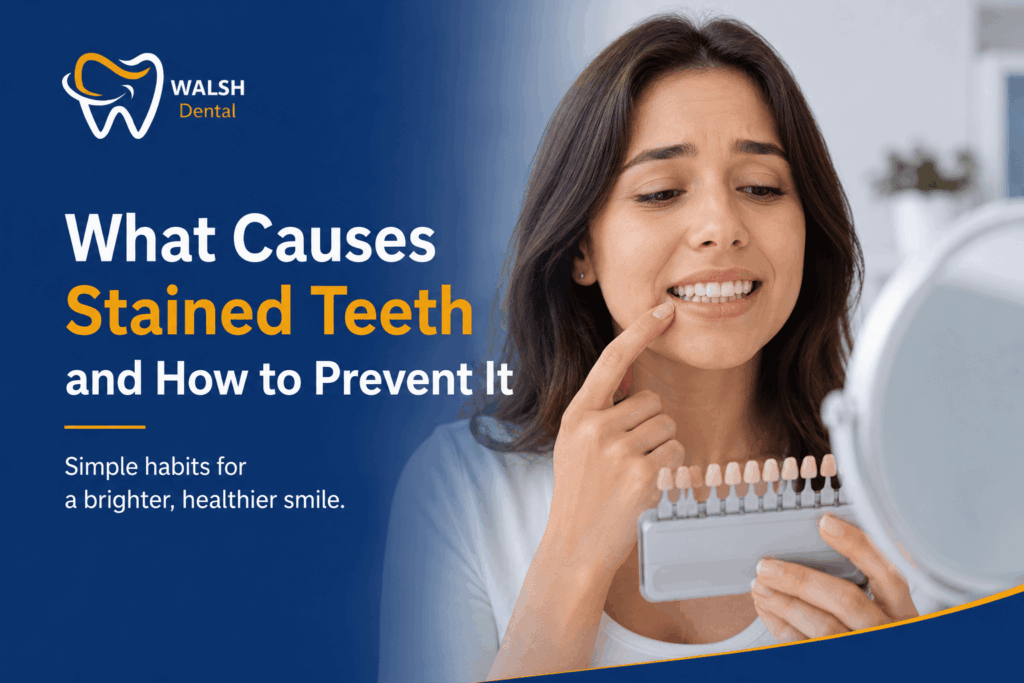
A bright, white smile is often seen as a sign of confidence and good oral health. However, many people struggle with tooth discoloration at some point in their lives. Stained teeth can affect not just your appearance but also your self-esteem. At Walsh Dental, helping patients achieve healthier and more radiant smiles is always a priority, and understanding the causes of staining is the first step toward preventing it. If you’re considering Dental treatment in Adelaide, knowing why teeth become discolored and how to avoid it can help you maintain long-term results and protect your smile. Why Do Teeth Get Stained? Tooth discoloration doesn’t happen overnight. It’s usually the result of multiple factors working together over time. Broadly, stains are divided into two categories: extrinsic (surface stains) and intrinsic (deep stains within the tooth). Extrinsic Stains: Surface-Level Discoloration These stains affect the outer layer of your teeth, known as enamel. They are the most common type and are usually caused by lifestyle habits. Daily consumption of beverages like coffee, tea, red wine, and soft drinks can gradually stain your teeth. Foods with strong pigments, such as berries, tomato-based sauces, and spices, also contribute to discoloration. Smoking or chewing tobacco is another major cause, leading to stubborn yellow or brown stains that are difficult to remove with regular brushing. Even though these stains are external, they can build up over time and dull your smile significantly. Intrinsic Stains: Deep Tooth Discoloration Intrinsic stains occur beneath the enamel, making them harder to treat. These stains may result from aging, trauma to the tooth, certain medications (like tetracycline), or excessive fluoride exposure during childhood. As we age, enamel naturally wears down, exposing the yellowish dentin underneath. This is why teeth often appear darker as time goes on, even with good oral hygiene. Professional care, such as Dental treatment in Adelaide, is often required to effectively address intrinsic stains. Can Poor Oral Hygiene Cause Stained Teeth? Yes, absolutely. One of the most overlooked causes of stained teeth is inadequate oral hygiene. When brushing and flossing are not done properly or regularly, plaque and tartar accumulate on the teeth. These deposits not only harm your gums but also attract stains more easily. Over time, this buildup can make your teeth appear dull, yellow, or even brown. Regular dental check-ups and professional cleaning play a crucial role in preventing this. At Walsh Dental, routine care is designed to remove stubborn buildup and keep your smile looking fresh. Are Certain Habits Making Your Teeth Darker? Many everyday habits contribute to tooth discoloration without people even realizing it. Frequent snacking, especially on sugary or acidic foods, can weaken enamel and make teeth more prone to staining. Drinking colored beverages without rinsing your mouth afterward allows pigments to settle on the enamel. Even habits like skipping dental visits or using improper brushing techniques can accelerate discoloration. Stress-related habits like teeth grinding (bruxism) can also wear down enamel, exposing darker layers beneath. Being mindful of these habits is key to maintaining a brighter smile. How Can You Prevent Tooth Stains? Preventing stained teeth is much easier than treating them later. With the right care and habits, you can keep your teeth looking naturally white for years. At Walsh Dental, preventive care is tailored to each patient’s needs, ensuring long-lasting oral health and aesthetics. What Treatments Are Available for Stained Teeth? If your teeth are already stained, don’t worry, there are several effective treatments available. Are Home Remedies Effective for Removing Stains? Many people try home remedies like baking soda or charcoal toothpaste to remove stains. While some of these methods may provide temporary results, they can be abrasive and damage enamel if used excessively. It’s always safer to consult dental professionals before trying DIY treatments. Walsh Dental emphasizes safe and effective solutions that protect your teeth while improving their appearance. How Does Diet Impact Tooth Color Over Time? Your diet plays a significant role in the long-term color of your teeth. Foods rich in calcium, such as dairy products, help strengthen enamel and keep teeth looking brighter. Crunchy fruits and vegetables like apples and carrots act as natural cleaners, reducing plaque buildup. On the other hand, highly processed and sugary foods contribute to enamel erosion and staining. Maintaining a balanced diet not only benefits your overall health but also supports a whiter smile. When Should You See a Dentist for Stained Teeth? If you notice persistent discoloration that doesn’t improve with regular brushing or over-the-counter products, it’s time to seek professional help. Early intervention can prevent stains from becoming permanent and may reduce the need for more complex treatments. A customized plan from Walsh Dental ensures that your specific concerns are addressed effectively. Why Choose Professional Care Over DIY Solutions? While DIY solutions may seem convenient, they often lack the precision and safety of professional treatments. Overuse of whitening products can lead to tooth sensitivity and enamel damage. Professional dental care offers controlled, safe, and long-lasting results. Whether it’s whitening, cleaning, or restorative treatments, expert guidance ensures that your teeth remain healthy while achieving the desired appearance. Final Thoughts Stained teeth are a common issue, but they are also highly preventable. By understanding the causes and adopting healthy habits, you can maintain a bright and confident smile. From lifestyle changes to advanced treatments, there are many ways to tackle tooth discoloration effectively. If you’re looking for reliable and personalized care, Walsh Dental offers comprehensive solutions tailored to your needs. Whether you need preventive care, whitening, or advanced procedures, choosing the right Dental treatment in Adelaide can make all the difference. Don’t wait for stains to take over your smile, book your appointment today and enjoy the confidence that comes with healthy, beautiful teeth.
Teeth Grinding Explained: Causes, Effects & Expert Dental Treatment in Adelaide
Teeth grinding, also known as bruxism, is more common than many people realize. While it may seem harmless at first, this condition can silently damage your teeth and impact your overall oral health. Many individuals in Adelaide experience teeth grinding without even being aware of it, especially during sleep. At Walsh Dental, we often see patients dealing with the long-term effects of untreated bruxism. Understanding the causes, symptoms, and available solutions is the first step toward protecting your smile. If you’re looking for reliable Dental Treatment in Adelaide, early diagnosis and proper care can make all the difference. What Is Teeth Grinding (Bruxism)? Teeth grinding refers to the involuntary clenching or grinding of teeth. It can occur during the day (awake bruxism) or at night (sleep bruxism). While occasional grinding may not cause harm, frequent or severe grinding can lead to serious dental issues. Sleep bruxism is particularly concerning because individuals are usually unaware of it. Often, it is only identified when symptoms begin to appear or when a dentist detects signs during a routine check-up. What Causes Teeth Grinding? Understanding the root cause of teeth grinding is essential for effective treatment. Bruxism is typically linked to a combination of physical, psychological, and lifestyle factors. At Walsh Dental, identifying the exact cause is a key part of providing effective and personalized Dental Treatment in Adelaide. How Do You Know If You Grind Your Teeth? Many people don’t realize they grind their teeth until symptoms become noticeable. Here are some common signs to watch for: If you notice any of these symptoms, it’s important to seek professional advice. Early intervention at Walsh Dental can prevent further damage and restore your oral health. What Happens If Teeth Grinding Is Left Untreated? Ignoring teeth grinding can lead to long-term complications that go beyond simple discomfort. Seeking timely Dental Treatment in Adelaide helps prevent these complications and ensures long-term dental health. Can Teeth Grinding Be Treated? Yes, the good news is that teeth grinding is manageable with the right approach. Treatment depends on the severity and underlying cause. At Walsh Dental, we offer a range of solutions tailored to each patient’s needs. What Are the Best Treatments for Teeth Grinding? At Walsh Dental, we focus on both treating the symptoms and addressing the root cause to deliver long-lasting results. How Can You Prevent Teeth Grinding? Prevention plays a crucial role in protecting your teeth from damage. Maintaining a consistent sleep routine, managing stress levels, and avoiding stimulants before bed can help reduce the risk. Regular dental check-ups are equally important, as dentists can detect early signs of grinding even before symptoms become noticeable. Using a professionally recommended mouthguard is one of the most effective preventive measures, especially for those who grind their teeth at night. When Should You See a Dentist? You should consult a dentist if you experience persistent jaw pain, tooth sensitivity, or headaches. Early diagnosis can prevent serious complications and reduce the need for extensive treatments. If you’re unsure whether you grind your teeth, a dental examination can provide clarity. At Walsh Dental, we use advanced diagnostic techniques to identify bruxism and recommend the most suitable treatment plan. Why Choose Professional Care for Teeth Grinding? While home remedies may provide temporary relief, professional dental care ensures accurate diagnosis and effective treatment. Choosing expert Dental Treatment in Adelaide means access to customized solutions, modern technology, and experienced professionals who understand your unique needs. Walsh Dental combines advanced dental care with a patient-focused approach, ensuring comfort and long-term results. How Does Teeth Grinding Affect Your Overall Health? Teeth grinding doesn’t just impact your oral health, it can also affect your overall well-being. Chronic pain, poor sleep quality, and increased stress levels are all linked to untreated bruxism. Addressing the issue early can improve not only your dental health but also your quality of life. Final Thoughts Teeth grinding may seem like a minor issue, but its long-term effects can be serious if left untreated. From worn teeth to jaw disorders, the impact can go beyond just your smile. The good news is that with the right care and professional guidance, bruxism can be effectively managed. Whether it’s through custom mouthguards, stress management, or restorative procedures, solutions are available to protect your teeth and improve your comfort.At Walsh Dental, we are committed to helping patients achieve healthier smiles through personalized care and advanced treatments. If you’re experiencing symptoms of teeth grinding, don’t wait, seek expert Dental Treatment in Adelaide and take the first step toward lasting relief. Book your appointment now!
Dental Treatment in Adelaide for Toothaches and Underlying Causes
Toothaches can start suddenly and quickly turn into one of the most uncomfortable dental problems. Whether it’s a dull ache, sharp pain, or sensitivity while eating, tooth pain is often a sign that something isn’t right inside your tooth or gums. Ignoring tooth pain can allow the problem to worsen over time. Getting the right Dental Treatment in Adelaide early can help relieve pain, treat the root cause, and protect your long-term oral health. In this guide, we explain the common causes of toothaches, how dentists diagnose the problem, and what treatments are available to restore your smile. What Is a Toothache? A toothache refers to pain that originates from a tooth or the surrounding gum area. The discomfort may be mild and occasional or severe and constant. Common symptoms include: These symptoms often indicate underlying dental problems that require professional Dental Treatment in Adelaide. Dentists use clinical exams and digital X-rays to determine what is causing the pain and recommend the best treatment. Common Causes of Toothaches Toothaches can occur for many reasons. Identifying the cause is essential because the right Dental Treatment will depend on the underlying condition. Below are some of the most common causes of tooth pain. 1. Tooth Decay: Tooth decay is one of the leading causes of toothaches. It occurs when bacteria in the mouth produce acids that gradually damage the enamel (the outer protective layer of the tooth). If tooth decay is not treated early, it can spread deeper into the tooth and reach the inner layers. Early Signs of Tooth Decay You may notice symptoms such as: At this stage, simple Dental Treatment in Adelaide such as fillings can repair the damage and stop the decay from progressing. Advanced Tooth Decay As the decay spreads deeper, symptoms can worsen and may include: If the infection reaches the tooth nerve, it can lead to severe pain and may require more advanced Dental Treatment such as root canal therapy. 2. Wisdom Teeth Problems Wisdom teeth are the last set of molars that usually appear in the late teenage years or early adulthood. In many cases, there is not enough space in the mouth for these teeth to grow properly. This can cause several issues, including: Sometimes wisdom teeth only partially erupt through the gum. When this happens, food particles and bacteria can become trapped, making the area difficult to clean. Professional Dental Treatment may include cleaning the area, treating infection, or recommending wisdom tooth removal if necessary. 3. Broken or Cracked Teeth Teeth can break or crack for a variety of reasons, including: Common foods that can cause tooth damage include: Using teeth as tools such as opening packages can also cause fractures. If the outer enamel layer breaks, the inner dentin layer becomes exposed. This can lead to sensitivity and pain. A dentist can evaluate the damage and recommend the right treatment such as dental bonding, crowns, or restorative procedures. 4. Gum Infections and Gum Disease Sometimes tooth pain actually comes from the gums rather than the tooth itself. Gum infections may cause symptoms like: If left untreated, gum disease can damage the tissues that support your teeth. Professional cleaning and periodontal treatment in Adelaide can help manage gum disease and prevent further complications. 5. Tooth Sensitivity Tooth sensitivity occurs when the protective enamel layer becomes worn or when gums recede, exposing the inner part of the tooth. You may feel pain when consuming: A dentist can recommend appropriate Dental Treatment such as desensitising toothpaste, fluoride treatments, or restorative procedures. What Should You Do If You Have a Toothache? If you experience tooth pain, it’s important to take action quickly. Temporary Relief at Home While waiting to see a dentist, you can try the following: These measures may provide temporary relief, but they do not treat the underlying cause. The best solution is to schedule Dental Treatment in Adelaide as soon as possible so the dentist can diagnose the issue and provide appropriate care. How Dentists Diagnose Tooth Pain? When you visit a clinic your dentist will perform a thorough evaluation to identify the cause of the toothache. This may include: Once the cause is identified, the dentist will recommend a treatment plan designed to relieve pain and restore oral health. Treatment Options for Toothaches The right treatment will depend on the cause of the pain. Dentists offering Dental Treatment in Adelaide may recommend several solutions. 1. Dental Fillings: For early tooth decay, fillings are used to restore the damaged part of the tooth and prevent further decay. 2. Root Canal Therapy: If the infection reaches the inner pulp of the tooth, root canal therapy may be required to remove the infected tissue and save the tooth. 3. Dental Crowns: For severely damaged or cracked teeth, crowns provide strength and protection. 4. Wisdom Tooth Removal: If wisdom teeth are causing pain or infection, removal may be recommended. 5. Professional Cleaning: If gum disease is causing pain, deep cleaning treatments can remove plaque and bacteria from below the gum line. Preventing Toothaches in the Future Many toothaches can be prevented by maintaining good oral care habits and visiting your dentist regularly. Practising good oral hygiene such as brushing your teeth twice a day with fluoride toothpaste and flossing daily, helps remove plaque and reduce the risk of tooth decay and gum problems. It is also important to be mindful of the foods you eat. Hard foods like candy, popcorn kernels, or ice can damage teeth and may lead to cracks or fractures. If you participate in contact sports or grind your teeth at night, wearing a mouthguard can help protect your teeth from injury and excessive wear. In addition, regular dental check-ups play a vital role in maintaining oral health. Routine visits allow dentists to detect potential issues early and provide preventive Dental Treatment in Adelaide, helping you avoid pain, infections, and more serious dental problems in the future. Get Fast Relief for Tooth Pain at Walsh Dental Toothaches can disrupt your daily
Cosmetic Dentistry Trends: What Experts Recommend in 2026
Cosmetic dentistry is changing quickly, and in 2026 patients have access to more advanced and personalised options than ever before. New technologies such as AI-assisted treatment planning and ultra-minimal veneer preparation are helping dentists create beautiful smiles while preserving more of your natural tooth structure. These modern approaches focus on comfort, precision, and results that look natural and suit each patient’s unique smile. At Walsh Dental, we keep up with the latest advancements to provide high-quality dental treatment in Adelaide. Our friendly team focuses on personalised care, modern technology, and treatment plans designed around your needs, helping you achieve a healthy, confident smile in a comfortable and supportive environment. 1. Teeth Whitening – Achieve a Brighter Smile A bright smile can make a big difference in how you look and feel. Modern whitening techniques have made it easier and safer to remove stains caused by coffee, tea, wine, and everyday foods. Thanks to advancements to provide high-quality dental treatment in Adelaide, professional teeth whitening is now faster, more effective, and designed to protect your enamel. Patients can choose between in-clinic whitening procedures or professional take-home kits recommended by their dentist. In-clinic treatments often use advanced light-activated systems that brighten teeth in a short amount of time, while take-home kits allow gradual whitening from the comfort of your home. Both options can deliver noticeable results when guided by a dental professional. With proper care and occasional touch-ups, you can maintain a brighter smile and feel more confident in everyday interactions. 2. Invisible Braces – A Discreet Way to Straighten Teeth Orthodontic treatments have evolved significantly over the years. Traditional metal braces are no longer the only option for straightening teeth. Clear aligner systems such as Invisalign have become increasingly popular because they offer a more discreet and comfortable alternative. These transparent aligners gradually shift teeth into the correct position while remaining nearly invisible. Many adults and teenagers prefer this option because the trays are removable, allowing them to eat comfortably and maintain their regular oral hygiene routine. Clear aligners also reduce the irritation sometimes associated with metal brackets and wires. With ongoing advancements to provide high-quality dental treatment in Adelaide, orthodontic planning can now be done digitally, helping dentists map out each stage of the alignment process. This technology improves treatment accuracy and gives patients a better understanding of their expected results. 3. Dental Implants – A Long-Lasting Tooth Replacement Missing teeth can affect both confidence and oral health. Dental implants offer a reliable and natural-looking solution for replacing missing teeth. Unlike removable dentures, implants are placed directly into the jawbone and function like natural tooth roots. Modern implant techniques have improved greatly over the years. Because of advancements to provide high-quality dental treatment in Adelaide, dental implant procedures are now more comfortable and precise than ever before. The materials used are strong, durable, and designed to integrate naturally with the jawbone. Once healed, dental implants provide excellent stability and allow patients to chew, speak, and smile with confidence. With proper care and regular dental visits, implants can last many years and provide a long-term solution for missing teeth. 4. Digital Smile Design – Visualising Your New Smile One of the most exciting innovations in modern dentistry is Digital Smile Design (DSD). This technology allows dentists to create a digital model of your smile before treatment even begins. Using advanced imaging and 3D scanning technology, dentists can analyse facial features, tooth proportions, and smile alignment. This information is then used to design a personalised treatment plan that suits your unique appearance. Thanks to advancements to provide high-quality dental treatment in Adelaide, patients can now see a preview of their potential results before committing to treatment. This helps patients feel more confident about their choices and allows dentists to make adjustments before starting procedures. Digital planning improves accuracy, communication, and overall satisfaction with cosmetic dental treatments. 5. Laser Dentistry – Precision and Comfort Laser technology has become an important part of modern dental care. It allows dentists to perform certain procedures with greater precision while minimising discomfort for patients. Laser dentistry can be used for treatments such as gum reshaping, cavity removal, and soft tissue procedures. The technology reduces bleeding, minimises swelling, and often speeds up the healing process. With modern advancements to provide high-quality dental treatment in Adelaide, laser tools allow dentists to perform treatments more efficiently while keeping patients comfortable. Many procedures that previously required more invasive techniques can now be completed with improved accuracy and shorter recovery times. 6. 3D Printing – Customised Dental Restorations 3D printing technology is transforming the way dental restorations are created. Dental clinics can now design and produce customised crowns, bridges, dentures, and other appliances with exceptional accuracy. The process begins with digital scanning of the patient’s mouth, which eliminates the need for traditional messy impressions. The digital model is then used to create a precisely fitted restoration using advanced 3D printing technology. These advancements to provide high-quality dental treatment in Adelaide help reduce waiting times while improving the fit and comfort of dental restorations. Patients benefit from faster treatment timelines and restorations that match their natural teeth more accurately. 7. Composite Bonding – A Simple Cosmetic Solution Minor cosmetic concerns such as small chips, gaps, or uneven tooth edges can affect the appearance of a smile. Composite bonding is a simple and effective solution for these issues. During this treatment, a tooth-coloured resin material is applied to the tooth surface, shaped carefully, and hardened with a curing light. The dentist then polishes the material so it blends naturally with the surrounding teeth. Because of advancements to provide high-quality dental treatment in Adelaide, bonding materials now look more natural and last longer than before. The treatment is usually completed in a single visit and requires little or no removal of natural tooth structure. Composite bonding is often chosen by patients who want quick cosmetic improvements without undergoing extensive dental procedures. 8. Gum Contouring – Improving Smile Balance The appearance of the gums plays
How to Prepare for Your Dental Check-Up: Tips from the Best Dentist in Adelaide
How to Get Ready for a Dental Check-Up—Real Tips from the Best Dentist in Adelaide Let’s be honest—a lot of people feel nervous before going to the dentist. You’re not alone. Even if nothing hurts, just thinking about sitting in that chair can make your stomach turn. But here’s the truth: a dental check-up doesn’t have to feel scary or stressful. It can actually be quick, calm, and helpful—if you’re prepared the right way.If you’re looking for the best dentist in Adelaide, especially around places like Burnside or Stonyfell, there’s a lovely spot called Walsh Dental. They’re known for being gentle and kind. They don’t rush, they explain things in simple words, and they truly care. Now, if you’re wondering what to do before your check-up, let’s go through it together. No fancy talk. Just real, easy tips. 1. First—Understand Why You’re Going You’re not going just because something’s wrong. A dental check-up is like a routine check for your teeth—just to make sure everything’s okay. Even if your mouth feels fine, there might be small issues you can’t see. Catching problems early means less pain later. It’s like taking your car in before it breaks down. Smart, right? 2. Clean Your Teeth (But Be Gentle) Before your visit, go ahead and brush your teeth. Give them a light clean. Maybe floss too. But don’t scrub like crazy thinking it’ll impress the dentist. That might actually hurt your gums. Just do what you normally do—neat and simple. And don’t panic if you forget. Dentists understand. They’ve seen it all. 3. Got Questions? Jot Them Down Ever walk out of the dentist and then remember something you wanted to ask? Yup, we’ve all been there. Before your appointment, write down: Any tooth pain or gum soreness Bleeding when brushing Bad breath that’s not going away Clicking in your jaw Questions about brushing, food, or anything else You can write it in a notebook or on your phone. And yes—every question matters. The team at Walsh Dental listens and explains without rushing. 4. Talk About Your Health Your mouth is part of your body—and everything’s connected. So, let your dentist know if: You’re on medication You’re pregnant You have diabetes or heart issues You feel nervous or scared They’re not just checking your teeth—they’re looking out for your full well-being. At Walsh Dental, they’re good at this. They speak kindly and listen without making you feel small. 5. Skip Eating Right Before Try not to eat a big meal right before your appointment. It’s better for you and easier for them. If you do eat, rinse your mouth or brush lightly. And maybe avoid foods that leave a strong smell (like garlic or coffee).You want to feel fresh when you sit back in that chair. 6. Get There a Little Early If your appointment’s at 10, try to reach by 9:45. That way, you’re not rushing. You can fill any forms, have a seat, and take a few deep breaths. Feeling nervous? Totally normal. Listen to music, take slow breaths, or bring a friend if it helps. The space at Walsh Dental is calm and peaceful. Most people say their nerves go away once they step inside. 7. Bring a Friend or Family Member Feeling shy or uneasy? No problem. Bring someone along. Whether it’s your partner, a friend, or your child, having a familiar face nearby can really help. Little kids and older folks especially feel safer with someone they trust beside them. 8. What Happens During the Visit? Here’s the usual: They check your teeth and gums—looking for holes, loose teeth, gum swelling, and more. Maybe an X-ray—it’s fast, safe, and helps see under the surface. Cleaning—they’ll remove tartar, polish your teeth, and leave you with that clean-mouth feeling. Advice—they’ll tell you what’s going well and what needs work. Simple. Not scary. No surprise pokes or pain. 9. After the Check-Up, Do What They Suggest Once it’s done, your dentist might say: Try brushing a little differently Use a softer toothbrush Get a small filling done Come back in 6 months If you don’t understand something, ask again. They’ll explain. At Walsh Dental, they’re patient and use simple words so you don’t leave confused. 10. Be Proud of Yourself You went. You showed up. You took care of your health. That’s a big deal. Not everyone does that. Many people avoid the dentist for years. But you made time for your teeth—and that’s something to feel proud of.Healthy teeth help you eat, talk, smile, and live better. You’re doing the right thing. Quick Recap (Easy to Remember) Understand why you’re going Clean your teeth gently Write down any questions Share your health info Don’t eat right before Arrive early and stay calm Bring someone along if needed Know what to expect during the visit Follow advice afterward Feel good about caring for yourself Why So Many People Trust Walsh Dental Some clinics feel cold. Some feel rushed. But Walsh Dental is warm, family-run, and built on kindness. They’ve been in Burnside for over 20 years, helping people from nearby suburbs like Erindale, Beaumont, Linden Park, Hazelwood Park, and Stonyfell. What makes them different? They explain things slowly and clearly They treat every patient with care They welcome kids, adults, and seniors They have easy parking out the back They actually listen to what you say If you’re looking for a place where you won’t feel judged or scared, they’re a great choice. A Final Word Taking care of your teeth is part of taking care of your whole self. It doesn’t need to be fancy or stressful. Next time your check-up is coming up, try these tips. Go somewhere that treats you like a person, not just a patient. Walsh Dental in Adelaide is one of those rare places. Contact us today and feel the difference for yourself—gentle care, clear answers, and a team that truly wants the best for you.
10 Ways to Choose the Dentist in Adelaide for Amazing Cosmetic Results
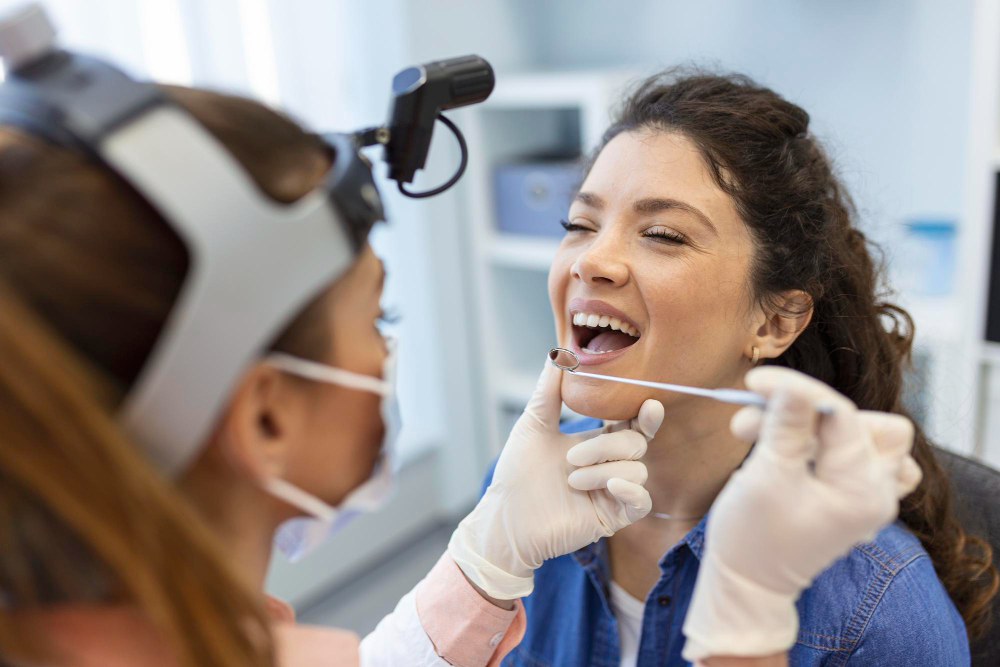
Finding a good dentist in Adelaide who can make your smile better is not always easy. You might feel nervous. You might wonder, “Will this work? Will it look good? Will I feel comfortable?” These are normal questions. Your smile is a big part of you, and it matters. At Walsh Dental, we help people every day who just want to feel happy about their smile. Some want whiter teeth. Some want to fix chips. Some want to close small gaps. No matter the reason, one thing is always true—people want to feel safe, understood, and treated kindly Let’s now talk, like friends, about 10 simple ways to choose the right cosmetic dentist. 1. Look at Real Smiles A dentist who does cosmetic work should show you real photos—smiles before and after treatment. These pictures help you see if they do good work. Look closely at the photos. Do the teeth look natural? Are the changes nice and not too fake? Do you like how the smiles look? If you look at the photos and think, “Yes, I want my smile like that,” it’s a good sign. 2. Ask Them About Your Smile Everyone’s smile is different. Maybe you have small teeth. Maybe one tooth is chipped. Maybe your front teeth have a space. Talk to the dentist. Ask simple things: Can you fix this tooth? Can you make my teeth look brighter? Is it possible to make my smile even? A kind dentist won’t rush. They’ll listen to your questions and explain things slowly. 3. Notice If They Listen to You Some dentists only talk. But a good one will also listen. You should feel like the dentist wants to know what you want. They will give you time to speak. They won’t hurry you.At Walsh Dental, we always start by listening. We know that people feel better when someone truly hears them. 4. Read What Others Say If you are not sure about a dentist, check what other people say. You can ask your friend or family. Or read a few simple reviews online. Some things to look for: Do people say the dentist is kind? Do they say the dentist made their smile better? Do they feel happy going back? If many people say the same good things, the dentist might be a good one. 5. Visit the Place First You don’t have to start treatment right away. Just go visit the clinic. Walk around. Sit in the waiting room. Say hello to the team. Ask yourself: Do I feel welcome here? Is the place clean? Are people talking nicely? If the clinic makes you feel calm, that’s a good start. You can also ask small questions like, “Do you do whitening?” or “Can you fix a front tooth?” Their answers will tell you how they treat people. 6. Watch How They Explain Things Some dentists use hard words. That’s not helpful. You want someone who explains things in a way you understand. A good dentist will say: What they will do Why they are doing it What the result will be How you will feel They won’t confuse you. You should feel clear after talking, not more worried. 7. Ask If They Make a Plan With You Cosmetic work is not only about teeth. It’s about how you want your smile to look. A dentist should ask things like What don’t you like about your smile? Do you want small changes or big changes? Do you have a photo of a smile you like? They should not tell you what to do. They should plan with you. That’s how you know they care about your feelings, not just your teeth. 8. See If They Are Gentle No one likes pain. The good news is that many cosmetic treatments today are very gentle. But you should still ask: Will this hurt? Will I feel okay after? What if I get scared? A kind dentist will answer softly and explain how they will keep you calm. At Walsh Dental, many patients say they feel relaxed during visits. That’s because we move slowly, speak gently, and always make sure you feel safe. 9. Check If They Help All Ages Cosmetic dental work is not only for adults. Teens sometimes break a tooth while playing. Older people may want to brighten their smile. A baby tooth may be chipped by a little child. If the clinic is kind to all—kids, teens, parents, and grandparents—that’s a great sign. It shows they have experience with many kinds of smiles and know how to treat everyone with care. A skilled Dentist Adelaide can help with a wide range of cosmetic treatments—whether it’s fixing a chipped tooth, whitening stained teeth, or restoring a broken crown. They understand that every age group has unique dental needs, from gentle care for little ones to advanced treatments for adults. A welcoming clinic will make every patient feel comfortable, explaining options clearly and ensuring the results look natural. When your dentist listens and customizes the treatment for you, the process is smoother, and your smile ends up looking exactly how you want it. 10. Think About the Next Visit Cosmetic care may take more than one visit. So it helps if: The clinic is near your home There is easy parking (there is parking behind Walsh Dental) They remind you of appointments You feel happy to return If you feel good walking into the clinic, it’ll be easier to come again when needed. After all these steps, there’s one more thing. How do you feel? Do you feel comfortable speaking with the dentist? Do you get excited when you view their work? Do you feel at ease when you sit in the clinic? If yes, then that’s your answer. Choosing a dentist is not just about teeth. It’s about feeling understood. Feeling calm. Feeling like your smile is in kind hands. Walsh Dental in Burnside has helped many families from Tusmore, Beaumont, Linden Park, Hazelwood Park, Stonyfell,
How to Help Your Child Develop Healthy Dental Habits

Taking care of your child’s teeth might sound scary at first, but don’t worry—it’s not hard. You don’t need to be a dentist. You just need a little bit of time, some patience, and a lot of love. At Walsh Dental, we meet many parents who ask things like, “When should I start brushing my baby’s teeth?” or “How do I stop my child from eating too many sweets?” Let’s begin with the first step. 1. Clean Even Before Teeth Come In You can begin cleaning your baby’s mouth before they get teeth. After feeding, take a clean, soft cloth, wrap it around your finger, and gently wipe their gums. That’s it. Nothing fancy. Just wipe. This helps keep their mouth clean and also gets them used to the idea that cleaning is a part of life. 2. First Tooth? Time for a Tiny Brush When the first little tooth shows up (usually around 6 months), it’s time to bring in a baby toothbrush. Select one with a tiny head and gentle bristles. Just water, no toothpaste yet. A small amount of toothpaste can be used once your child is one year old. Just a dot. Like a grain of rice. Nothing more. 3. Brushing Should Be Fun—Not a Fight Most kids don’t like brushing in the beginning. That’s normal. Don’t make it feel like a job. Make it a game. Let them choose the toothbrush they want, maybe one with a cartoon on it. Play music while brushing. Dance a little. Sing a silly brushing song. Or make up a story: “Let’s chase the sugar bugs away!” And yes—brush together. Kids love copying parents. 4. Show Them How, Step by Step Don’t expect your child to know how to brush correctly. They need to learn from you. Stand with them in front of a mirror. When brushing, teach them to utilize small circles. Say anything like. “Let’s clean the front teeth first.” At first, you’ll be the one brushing. Later, they’ll start doing it by themselves. 5. Two Times a Day, Every Day Morning and night. No skipping—not even when you’re tired. Try adding brushing to their daily routine: Morning: Wake up → brush teeth → breakfast Night: Dinner → story → brush teeth → sleep Kids like routines. If brushing becomes part of “what we do every day,” there’ll be less fuss. 6. Cut Down the Sugar (But Don’t Panic) Yes, children love sweets. It’s okay. Saying “no” to every treat is not necessary. Just watch how much and how often. Here’s what helps: 7. First Dentist Visit? Go Early Many parents think they should wait until their child is older before seeing a dentist. But it’s better to go early—around age 1 or when the first tooth shows up. Why? 8. Be a Good Example Your child watches everything you do. If you brush your teeth and smile while doing it, they will copy you. If you floss, they’ll want to try it too. If your child brushes for 30 seconds, praise them. So, don’t just tell them to brush—show them. Say things like: 9. Praise Goes a Long Way Want to take it further? Make a brushing chart. Every time they brush, they get a star. After 7 stars, they can get a small reward—a sticker, a story, or a little surprise. Not candy! Kids love feeling proud. 10. Use Toys or Stories to Help Turn brushing into a game. Say things like: Make up silly voices. Let their favorite toy “talk” about brushing. It becomes easier the more joyful you make it. 11. Don’t Scare Them Never say things like Instead, say: 12. When to Start Flossing When your child’s teeth start touching each other (usually after age 2), you can start flossing. Don’t worry if it’s hard at first. Use soft, colorful flossers made for kids. Floss for them gently. Later, they’ll try it themselves. One step at a time. No rush. 13. Play Sports? Get a Mouthguard If your child plays football, cricket, or any sport where there’s risk of falling or bumping into others—ask your dentist about a mouthguard. It’s like a helmet for teeth. It can save your child from injury. 14. No Smoking Around Kids Even if your child doesn’t smoke (of course!), breathing in smoke from adults nearby can harm their dental health. Try to keep smoking far from kids. Their growing bodies and teeth are very sensitive. 15. Teens Need Reminders Too Just because your child is older doesn’t mean they stop needing you. Teenagers sometimes forget to brush or think they’re too busy. Keep reminding them—gently. You can say: Look, parenting is not easy. You have so much to do already. And sometimes, your child might cry, refuse to brush, or make a mess. That’s normal. Just keep trying. Every little effort adds up. A clean, healthy mouth means fewer problems later. No pain, no fear, and a big, happy smile. And remember—if you ever feel unsure or just need someone to guide you and your child through it, Walsh Dental is here. We love helping families and have years of experience in children dentistry, making dental visits simple and fun for kids.Call us today to book an appointment. Let’s keep those little teeth strong, shiny, and smiling—together.